
Reviewed · COOKING CLASSES
Mallorca: Market Visit and Traditional Cooking Workshop
Mallorca’s food culture comes into focus at the market stalls, then lands on your plate at Forn de sa Llotgeta, an 18th-century bakery in central Palma. Deborah leads the experience, explaining the island’s ingredients, food traditions, and the reasons behind each dish before you cook and eat together.
I especially like the small group limit of eight, which gives the workshop a personal feel, and the clear link between the market visit and the cooking. You see the ingredients, meet the sellers, then use local products in a full meal. The main consideration is price: at $171 per person, this is a serious splurge, and the market tasting may be modest.
In This Review
- Key points at a glance
- Why this Palma food experience feels different
- Meeting the market at Mercat de l’Olivar
- Cooking inside Forn de sa Llotgeta
- What you may cook and eat
- Wine, tastings, and what the $171 price covers
- Traditional food with a sustainable purpose
- The teaching style and cultural detail
- Who should book this class
- Practical details before you reserve
- Should you book the Mallorca cooking workshop?
- FAQ
- How long does the Mallorca cooking experience last?
- Where is the meeting point?
- What does the market tour include?
- What food is included?
- Is wine included?
- Which languages are offered?
- How large is the group?
- Can the workshop accommodate vegetarian or vegan diets?
- Are children allowed?
Key points at a glance
- Mercat de l’Olivar first: Spend an hour exploring Palma’s main traditional market, with stops for fruit, fish, meats, and other local products.
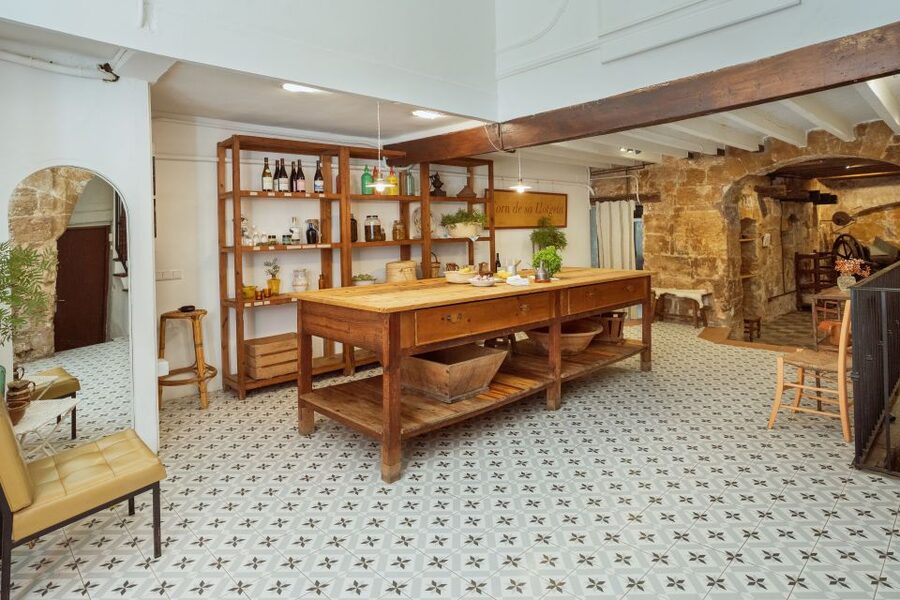
- An 18th-century cooking setting: Prepare the meal at Forn de sa Llotgeta, a historic bakery and working studio in central Palma.
- Seasonal family recipes: The menu changes with the island’s food calendar, so the dishes depend on the time of year.
- A full four-course meal: Expect an aperitif, starter, main course, dessert, and two glasses of local wine.
- Hands-on, not just demonstrative: You help prepare the food, use traditional methods, and receive recipes and materials to repeat the dishes at home.
- Best for adults and older children: Open groups are limited to eight, while vegetarian, vegan, and child-friendly arrangements are handled only in private groups.
Why this Palma food experience feels different
Many cooking classes begin with a table of preselected ingredients. This one begins at Mercat de l’Olivar, about ten minutes from the workshop studio. That matters because you first see the products in their normal setting, rather than meeting them after they have been cleaned, measured, and placed in bowls.
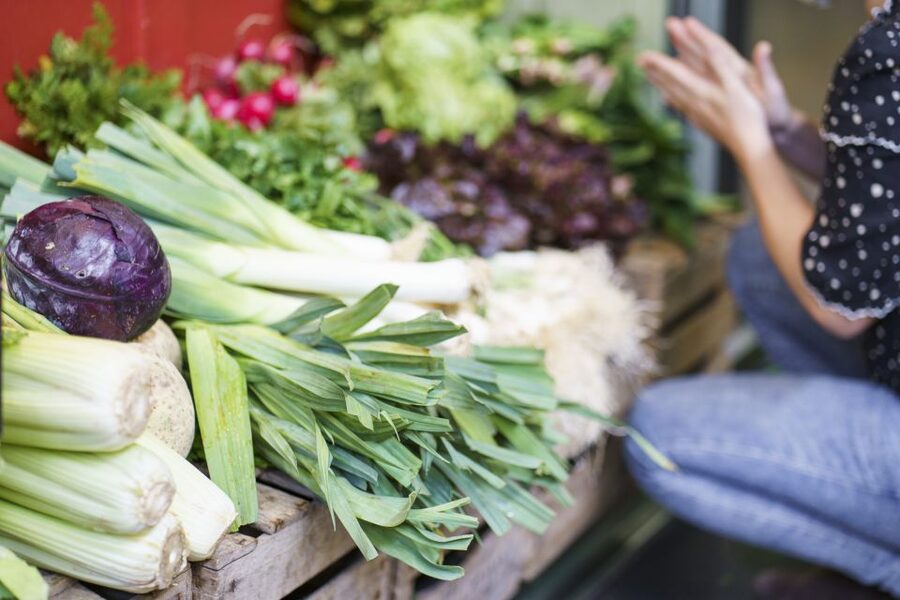
The market visit lasts about an hour. You walk through fruit, fish, meat, and delicacy stalls, learn how local foods fit into Mallorcan cooking, and source some of what you will use later. The market is also a useful introduction to Palma itself. You are not simply buying groceries. You are seeing how the city connects with island farming, fishing, baking, curing, and seasonal eating.
The experience is built around a practical idea: traditional food can teach you how to use what grows nearby, waste less, and cook in step with the time of year. That gives the workshop more substance than a standard recipe lesson. You learn why an ingredient appears on the table, not just how to chop it.
Still, keep your expectations measured. The included market tasting is described as local delicacies, such as ham, and the amount may be small. One included tasting is not a market lunch. The main meal comes later at the studio.
More cooking classes on Mallorca:
- Spanish Cooking Experience in Mallorca
★ 5.0 · 484 reviews - Palma de Mallorca: Spanish Cooking Experience
★ 5.0 · 288 reviews - Palma: Mediterranean Cooking Class with Drinks
★ 4.8 · 240 reviews
Meeting the market at Mercat de l’Olivar
Mercat de l’Olivar is the largest traditional market in Palma, and it is an excellent starting point for a food-focused morning or afternoon. Your meeting point is in front of the statue El darrer vestit a l’ampla, beside the BBVA bank and directly in front of the market.
The guide takes you through the stalls and explains the products that shape Mallorcan cooking. The available details name fruit, fish, and other delicacies, with the exact stops changing according to the season and the menu. This is one of the strongest parts of the experience for anyone who likes food with a sense of place.
You might see ingredients that later appear in the workshop, including almonds, grapes, greens, artichokes, local meats, or sobrasada. The point is not to collect a long shopping list. It is to understand how a market ingredient moves from stall to kitchen.
The food culture here also includes animal products. Local cold meats, artisan cheese, ham, and sobrasada are part of the traditional picture, and the workshop treats them as cultural ingredients rather than avoiding them. That makes the class a good fit if you want an honest look at classic Mallorcan cooking.
The market tour is also the part most likely to feel too brief for the cost. You receive a tasting, but you should not expect a sequence of generous samples at every stall. If you want to shop for gifts or specialty foods, bring extra money and time after the activity. Personal market purchases are not included.
Cooking inside Forn de sa Llotgeta
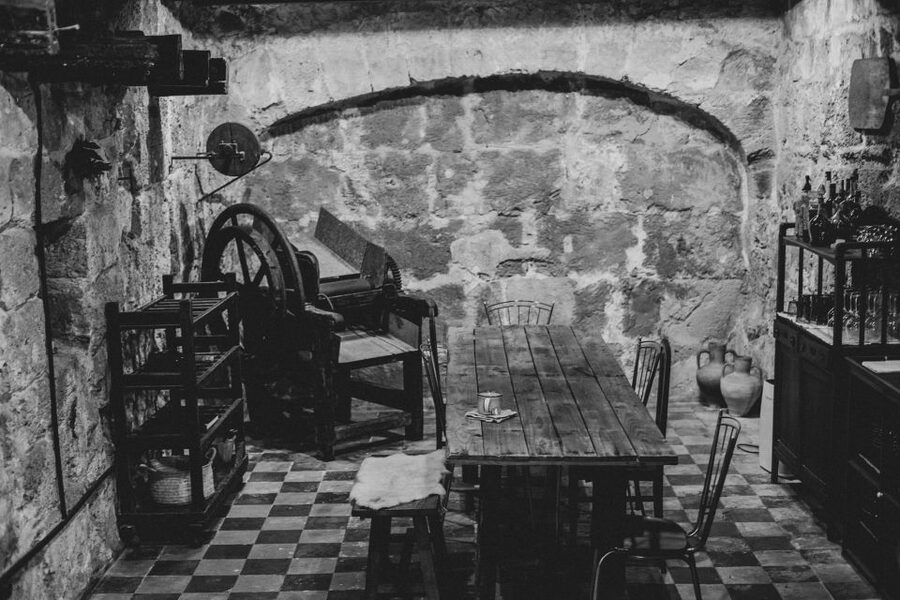
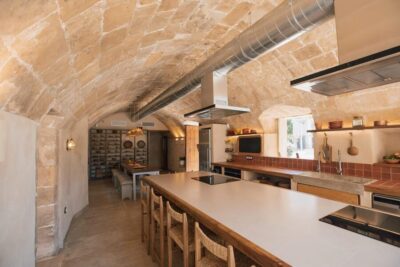
After the market, you head to the atelier at Forn de sa Llotgeta for roughly three hours of hands-on cooking. This historic bakery dates from the 18th century, and the setting gives the workshop a strong connection to Palma’s older food traditions.
The studio is described as a comfortable place to prepare, cook, and dine. That combination is important. You are not rushed out after the last pan leaves the stove. The food becomes a shared meal, with time to sit together and taste the results.
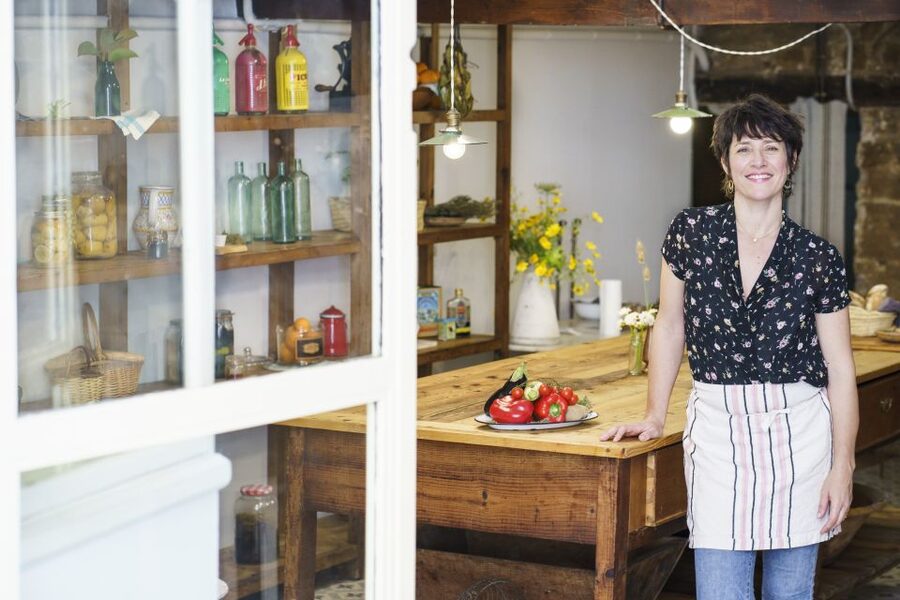
Deborah leads the class in English or Spanish. Her teaching includes the food itself, the history of Mallorcan culinary traditions, and the life of island residents before mass tourism changed the economy. If you are interested in culture as well as cooking, this background adds real value.
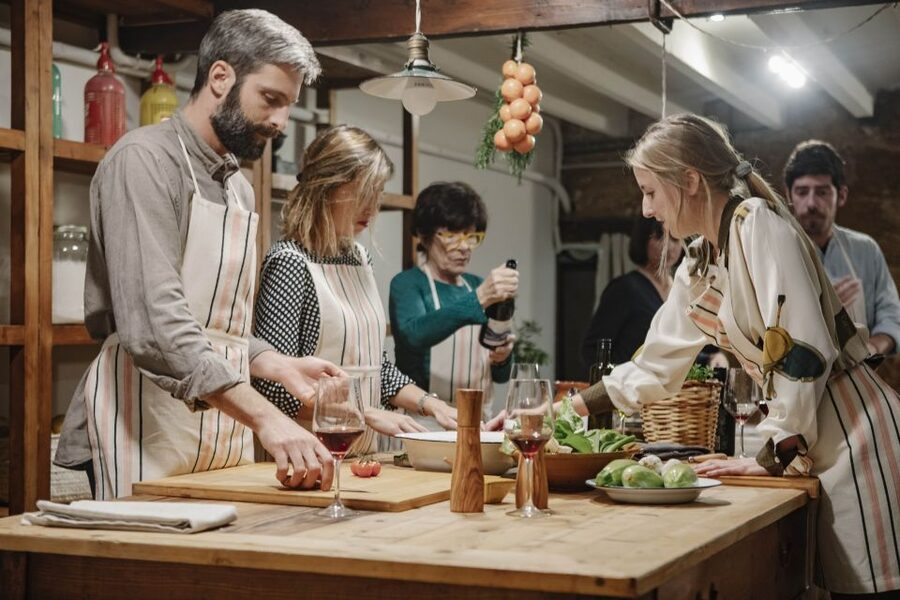
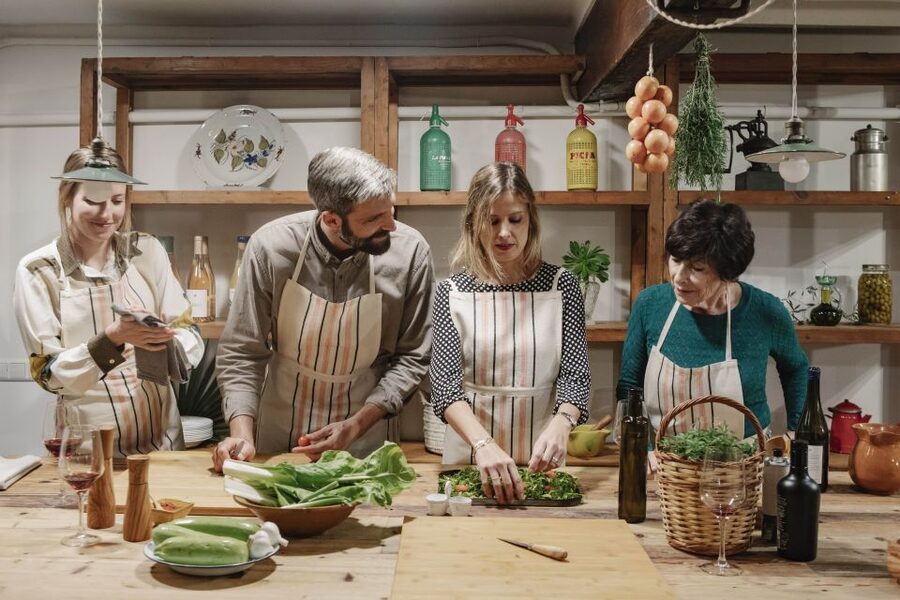
The class is designed for participation. You help prepare a complete seasonal menu rather than watching a chef perform every step. The recipes follow family traditions and the island’s food calendar, so the menu is not fixed throughout the year. That is a plus for repeat visitors, since a return visit in another season should bring different ingredients and dishes.
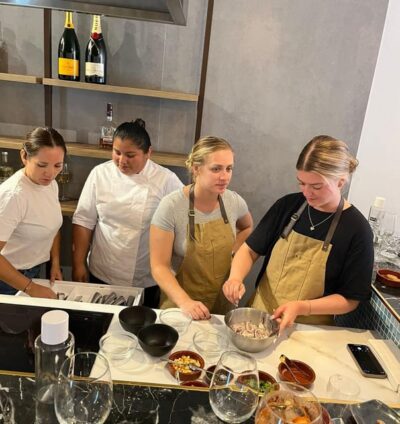
The group size helps here. Open sessions are limited to eight people, with one recent class totaling seven. That is small enough for direct instruction and shared work without turning the kitchen into a crowded production line. Private classes are available for two to fifteen people, subject to availability.
What you may cook and eat
The sample menu gives you a good sense of the class:
- Local cold meats and artisan cheeses with grapes and almonds
- Mallorcan flatbread with greens and raisins
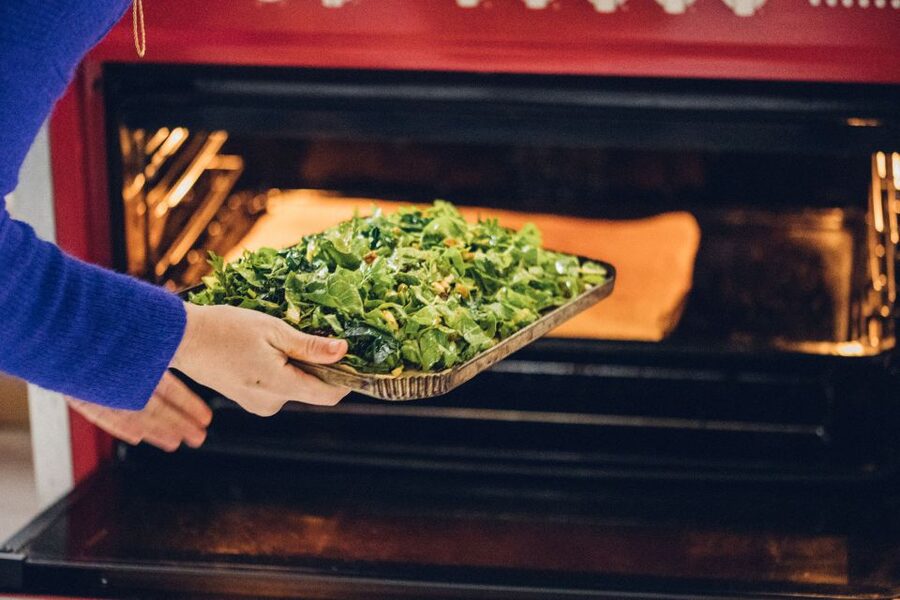
- Artichokes and sobrasada meloso rice cooked in a clay pot called a greixonera
- Gató, a Mallorcan almond cake, served with almond ice cream
This menu is useful because it covers several sides of island cooking. The cold meats and cheese introduce preserved foods and farm products. Grapes and almonds add two ingredients closely linked with Mediterranean agriculture. The flatbread shows how simple dough and seasonal greens can make a substantial dish.
The rice course is likely to be the main lesson. Meloso rice is softer and more yielding than a dry rice dish, and the greixonera connects the recipe to older cooking methods. Artichokes bring a seasonal vegetable element, while sobrasada supplies the bold, pork-based flavor associated with Mallorca.
Dessert keeps the almond theme going. Gató is a traditional Mallorcan almond cake, and pairing it with almond ice cream makes the final course feel like a proper ending rather than an afterthought.
The exact menu can change. The class follows seasonal products, so you should not book expecting this precise set of dishes on every date. That is part of the appeal, but it also means you should ask ahead if one specific recipe is the reason you want to attend.
More hands-on sessions around Mallorca:
- Spanish Cooking Class Palma meals+drinks 7 dishes Full meals
★ 5.0 · 122 reviews - Spanish Cooking Class Palma meals+drinks 7 dishes Full meals
★ 5.0 · 58 reviews - Cala Millor Trike Tour !! Driving licence class B Sufficient
★ 4.5 · 47 reviews - Mallorca: Stand Up Paddle Lesson (1H PRIVATE CLASS)
★ 4.9 · 44 reviews
Wine, tastings, and what the $171 price covers
At $171 per person, this is not a budget food activity. I would compare it with the cost of a quality four-course meal, a guided market visit, a three-hour lesson, ingredients, instruction, and the chance to recreate the food at home.
The price includes the one-hour market tour, local tasting, all ingredients and cooking materials, recipes, the guided workshop, the four-course meal, and two wine glasses per person. Organic wines are paired with the meal, though additional wine costs extra.
That package makes the price easier to understand, especially if you value personal instruction and cultural context. You are paying for access to the teacher, the studio, the food, and the preparation, not simply for lunch. The recipes and materials also have a small after-trip benefit: you can try to make the dishes again with products from home.
The value is weaker if you mainly want to eat. A market snack, a restaurant meal, and a recipe book would cost less. It is also worth noting that the included market tasting is not extensive. One tasting may be as limited as a single slice of ham, so do not count on the market portion to satisfy your appetite.
The wine inclusion is welcome, but the allowance is controlled. You receive two glasses per person, and anything beyond that is not included. If you do not drink wine, the price does not appear to drop.
Traditional food with a sustainable purpose
The class puts seasonality and local sourcing at the center. Ingredients come from small producers and farmers, and the cooking follows the island’s food calendar. This gives you a direct way to understand sustainability through food rather than through a lecture.
The approach is also practical. Traditional cooking often grew from limits: what farmers could produce, what markets supplied, and what families could preserve. A menu built around greens, almonds, artichokes, raisins, and local cured foods shows how a small set of nearby products can support a varied meal.
The class does not pretend that traditional Mallorcan cooking is fully vegetarian. Animal protein is an important part of the food culture, and the sample menu includes cold meats, cheese, and sobrasada. That honesty is useful if you want to understand the cuisine as it is commonly made.
Vegetarian and vegan versions can be arranged for private groups. If you have a dietary requirement, tell the provider before booking. Severe allergies or very specific restrictions should be discussed before you reserve, since substitutions are not presented as a standard feature of the open group.
The teaching style and cultural detail
The strongest part of the workshop is likely to be Deborah’s role as both instructor and cultural guide. The experience is not limited to recipe instructions. She explains the island’s food customs, the ingredients, and the way life in Mallorca worked before tourism became such a major force.
That context gives simple foods more meaning. A piece of cured meat, a clay pot, or an almond cake is not treated as a decorative symbol of Mallorca. You learn how these foods fit into family cooking and local production.
The teaching is described as relaxed and clear, with room for questions and shared work. Since the class is offered in English and Spanish, you should be able to follow the instruction in either language. The small group format also makes it easier to take part instead of standing behind a crowd.
The experience can continue beyond the kitchen. Deborah has offered suggestions for less obvious places to visit in Palma, including restaurants and museums. That guidance is not listed as a formal part of the tour, so think of it as a useful extra rather than something guaranteed at every session.
Who should book this class
I would choose this experience if you like to understand a place through its food and want more than a quick cooking demonstration. It suits couples, friends, and solo visitors who are comfortable sharing a small-group kitchen and eating a menu that may include pork and dairy.
It is also a smart choice early in a Mallorca stay. The market introduces you to local products, while Deborah’s wider advice can help shape later meals and sightseeing. One person used the class as the beginning of a week on the island and found the seasonal focus a reason to return at another time of year.
This is not the best choice for a family with young children. The activity is marked as unsuitable for children under 12, and the detailed guidance says the courses are not recommended for children under 10, though children are welcome in private groups. If you are booking for a child, arrange a private session and confirm the age policy first.
People with strict dietary needs should also consider a private booking. Vegetarian and vegan adaptations are available for private groups, while the open class is built around traditional recipes that include animal products.
Practical details before you reserve
The full experience lasts four hours: one hour at the market and three hours at the workshop. It takes place in central Palma, and hotel pickup and drop-off are not included, so plan your own way to the meeting point.
The meeting spot is easy to identify: in front of the statue El darrer vestit a l’ampla, outside Mercat de l’Olivar on the side of the BBVA bank. Starting times vary, so check availability for your date.
The class runs in English or Spanish. Open groups hold no more than eight people. Private sessions can accommodate two to fifteen people, subject to availability.
You can cancel up to 24 hours before the start for a full refund, and reserve now while paying later. Those terms help if your Palma plans are still shifting, but they do not change the need to disclose allergies and dietary requirements before booking.
Should you book the Mallorca cooking workshop?
Book it if you want a small, food-centered cultural experience with a real market visit, seasonal cooking, and a meal you help prepare. The combination of Mercat de l’Olivar, Forn de sa Llotgeta, Deborah’s instruction, and a four-course lunch gives the half-day a clear purpose.
Skip it if you are looking for the cheapest way to sample Mallorcan food, if you want a long market tasting, or if you need an open-group vegan menu. At $171, the value depends on how much you want the teaching, recipes, setting, and cultural explanation.
For most food-curious visitors, I would book this early in a Palma stay, confirm the menu and dietary arrangements, and arrive hungry enough for lunch but not expecting the market tasting to fill you up.
FAQ
How long does the Mallorca cooking experience last?
The experience lasts four hours in total. One hour is spent touring Mercat de l’Olivar, followed by three hours of hands-on cooking at the atelier.
Where is the meeting point?
Meet in front of the statue El darrer vestit a l’ampla, in front of Mercat de l’Olivar on the side of the BBVA bank.
What does the market tour include?
The one-hour market tour includes an introduction to local stalls and products, plus tastings of local delicacies such as ham. In the evening, the included aperitif is one vermut and a banderilla.
What food is included?
The activity includes a four-course meal based on the dishes prepared during the workshop. A sample menu includes cold meats and cheeses, Mallorcan flatbread, artichoke and sobrasada rice, and gató with almond ice cream.
Is wine included?
Yes. The experience includes two wine glasses per person, with local organic wines paired with the meal. Additional wine is not included.
Which languages are offered?
The workshop is offered in English and Spanish.
How large is the group?
Open groups are limited to eight participants. Private courses can be arranged for two to fifteen people, subject to availability.
Can the workshop accommodate vegetarian or vegan diets?
Vegetarian and vegan versions can be arranged for private groups. You should provide dietary requirements before booking, especially for severe allergies or very specific restrictions.
Are children allowed?
The activity is marked as unsuitable for children under 12. The detailed course information says children under 10 are not recommended, but children may join private groups, so confirm the arrangement with the provider before booking.
More Shopping Tours in Mallorca
- Palma: 2.5-Hour Chinatown Market Tour
★ 4.7 · 18 reviews - Mallorca: Fashion Outlet Shopping Excursion by Bus
★ 4.6 · 5 reviews
More Markets in Mallorca
- Cap de Formentor: Market, Beach, and Alcudia Tour
★ 4.3 · 620 reviews - Mallorca: Alcudia Old Town, Market, and Formentor Beach
★ 4.2 · 231 reviews - Formentor with boat trip + local market
★ 4.0 · 73 reviews - 4-Hour Market Visit and Traditional Cooking Workshop in Palma
★ 5.0 · 38 reviews
Just added around Mallorca
- Discover the major cultural attractions of Palma De Mallorca on a Private Tour★ 4.5 · 3 reviews
- Wine Tasting – wines from the smallest wineries 3 wines★ 5.0 · 3 reviews
- Extreme e-scooter off-road excursions★ 5.0 · 3 reviews
- Full-day Tour to Drach Caves and Portocristo Town★ 4.0 · 3 reviews
- Gaudí and Modernist Art: Guided Tour in Palma de Mallorca★ 4.5 · 3 reviews
- Mallorca Beyond the Guidebooks – Tour with the famous Author★ 5.0 · 3 reviews
- Peguera: The lovely Magical Creatures of Peguera,family walk★ 3.1 · 3 reviews
- Mallorca: Speleo-Coasteering Tour along the Coast of Alcudia★ 5.0 · 3 reviews
Cooking Classes, compared.
Spanish Cooking Class Palma meals+drinks 7 dishes Full meals
Read our review →Spanish Cooking Class Palma meals+drinks 7 dishes Full meals
Read our review →
4-Hour Market Visit and Traditional Cooking Workshop in Palma
Read our review →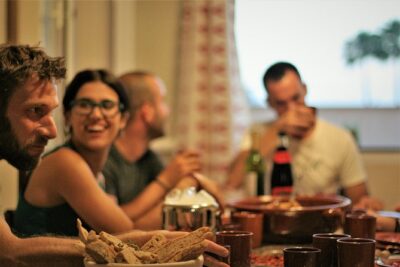
Browse the lists this tour appears in