
Reviewed · WINE TOURS
Mallorca Wine Experience
Mallorca’s wine story comes to life in a small cellar beneath a Palma wine shop, where you taste island-grown wines beside local cheese and sobrasada. The setting feels personal rather than commercial, and the host has time to explain what is in your glass and why a pairing works. The food changes the wine, often in surprising ways.
I like the small maximum of eight people, which gives you room to ask questions. I also like that the wines come from Mallorca, not from a grab bag of famous labels from around Spain. The main consideration is pace: the full session lasts about two hours, and some explanations can feel slow if you want a quick tasting rather than a class.
In This Review
- Key points about the Palma tasting
- Finding Avinae in Palma’s old center
- What happens during the two hours
- Manto Negro, Callet, and Giro Negre
- The Mallorcan cheese and sobrasada pairing
- A personal conversation, not a winery tour
- Is $82.27 a fair price?
- Who will enjoy this most
- Practical details before you book
- Should you book the Mallorca Wine Experience?
- FAQ
- Where does the Mallorca Wine Experience begin?
- Where does the experience end?
- How long does the tasting last?
- How many people can join the tasting?
- Is this a vineyard or winery tour?
- What food is served with the wine?
Key points about the Palma tasting
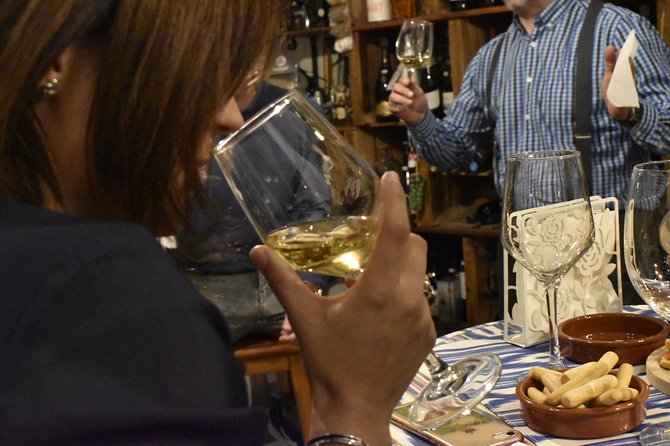
- A cellar setting in central Palma: You meet at Avinae Wine & Spirits on Carrer dels Llums, in the old center of the city.
- Mallorca in the glass: The focus is on local grapes such as Manto Negro, Callet, and Giro Negre.
- Food is part of the lesson: Taste cheese, sobrasada, meats, jams, chocolate, and other small bites with the wines.
- A small group by design: The maximum is eight people, with some sessions becoming almost private.
- More classroom than vineyard tour: You learn about wine, producers, and pairings, but you do not visit vineyards or a working winery.
- A useful Palma activity: The indoor setting makes this a good choice for a hot afternoon or an easy evening stop.
Finding Avinae in Palma’s old center
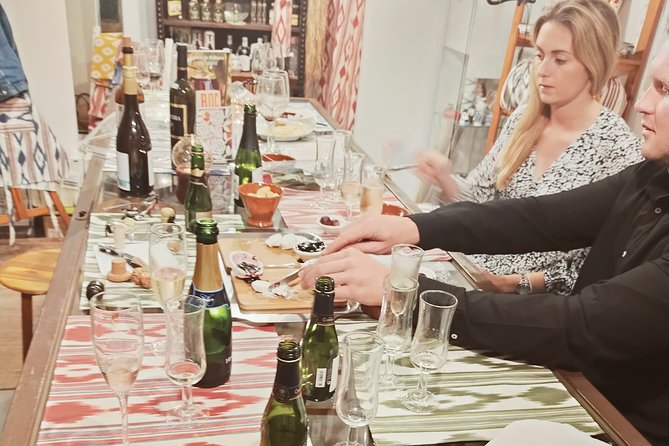
The experience starts at Avinae Wine & Spirits, Carrer dels Llums, 3, in Palma’s Centre district. It ends at the same place, so you do not need to arrange a second pickup or find your way back from the countryside.
That location shapes the experience. You are not being driven out to a vineyard, and you will not see vines, fermentation tanks, or a rural winery. Instead, you step into a city wine shop and its cellar, a practical choice if you are staying in Palma and want to fit a tasting around sightseeing.
The shop is easy to reach by public transportation, and the tasting stays close to the historic center. I would allow a little extra time to locate the entrance, especially if you are unfamiliar with Palma’s narrow central streets. The booking information says most people can participate, and service animals are allowed.
The room itself is part of the charm. It has the intimate feel of a small wine merchant rather than a polished corporate tasting room. One practical note: seating has been described as less comfortable than ideal, so this may matter if you prefer to stand, move around, or keep a formal presentation brief.
More Mallorca wine tastings:
- Mallorca: Horseback Riding Excursion and Wine Tasting
★ 4.8 · 383 reviews - Palma de Mallorca: Gourmet Tapas and Wine Tour
★ 4.5 · 371 reviews - Alcudia: Sailing Yacht Excursion with Wine & Tapas
★ 4.4 · 236 reviews
What happens during the two hours
The session begins with an introduction to Mallorcan wine and the island’s local grape varieties. The host explains the bottles being poured, the producers behind them, and the role of local food in the tasting.
Hosts have included Sebastian, Gabriel, and Shota, with backgrounds in wine service and sommelier work. The exact host may vary, but the format depends heavily on that person’s ability to explain wine in plain language. You can expect plenty of conversation and time for questions rather than a quick pour, sip, and move-on routine.
The tasting commonly includes several wines, with five glasses mentioned in the experience feedback. The selection includes both white and red wines, and the focus remains on Mallorca. Manto Negro, Callet, and Giro Negre are among the island varieties discussed, giving you a useful introduction to grapes you may not often encounter outside the Balearic Islands.
The material is not limited to grape names. You may discuss how wine is made, how it should be stored and cared for, and how smell, texture, acidity, and finish affect the way it works with food. A blind tasting may also appear, adding a small game to the more serious instruction.
The pace is deliberately unhurried. That suits you if you want to understand what you are drinking and ask about wine in relation to places you already know. It may feel too long if you have done many tastings and simply want a rapid sample of local bottles.
Manto Negro, Callet, and Giro Negre
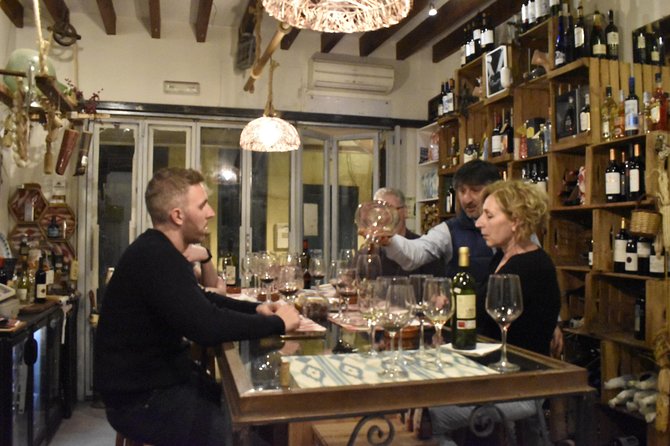
Mallorca has its own wine vocabulary, and this tasting gives you a way to begin using it. Manto Negro, Callet, and Giro Negre are not just names on a lecture sheet. They help explain why Mallorcan wines can taste different from the better-known wines you may have sampled elsewhere in Spain.
The host connects each varietal to the wine in your glass. You learn to pay attention to the differences between whites and reds, then consider how those differences change once food enters the picture.
That last step is especially useful. Many wine tastings tell you that a bottle pairs well with a dish, then move on before you understand why. Here, you can compare the wine before and after a bite of cheese, sausage, chocolate, or another snack. The result is a practical lesson in how salt, fat, sweetness, and spice affect your palate.
You do not need to arrive with a trained palate. The experience is designed around explanation and discussion, not a test. If you already know wine, you can ask more detailed questions about producers and styles. If you are new to wine, the host can give you a framework for noticing what you like.
The Mallorcan cheese and sobrasada pairing
The food begins with a Mallorcan and Mahón cheese plate. Queso de Mahón is associated with the nearby island of Menorca, while Queso Mallorquín brings the tasting back to Mallorca. Together, they provide different textures and levels of saltiness for comparison.
Sobrasada is also served. This soft, paprika-seasoned sausage is one of Mallorca’s most recognizable foods, and it gives the red wines a richer, spicier partner than cheese alone.
The food selection may extend beyond the listed starter. The tasting has included different meats, jams, chocolate, and other small bites. These are not meant to replace lunch or dinner. Think of them as teaching tools, with each bite showing you something about the wine.
This is one of the strongest reasons to choose the experience. You are not merely drinking local wine. You are learning how the wine behaves at the table, which is far more useful once you return home and open a bottle with a meal.
The portions are described as generous enough to leave some people pleasantly rosy-faced by the end. Pace yourself. Two hours of tasting can sneak up on you, especially when several wines and multiple pairings are involved.
Same island, a completely different kind of day:
- Palma: Cathedral of Mallorca Skip-the-Line Entry Ticket
★ 4.6 · 14,386 reviews - Palma de Mallorca: 5-Hour Catamaran Cruise with Lunch & Swim
★ 4.5 · 9,957 reviews - Porto Cristo: Caves of Hams Entry Ticket
★ 4.2 · 6,548 reviews - Palma de Mallorca: City Sightseeing Hop-On Hop-Off Bus Tour
★ 4.1 · 4,450 reviews
A personal conversation, not a winery tour
The format is best understood as an educational wine tasting in Palma. It is not a vineyard excursion, and there is no countryside transfer included.
That distinction matters when you compare options. If your goal is to walk through vines, visit a production facility, or meet a winemaker at the estate, choose a winery tour instead. If you want local wines without spending half a day on transport, Avinae makes good use of your time in the city.
The small group helps the discussion. With a maximum of eight people, the host can respond to individual questions and adjust the conversation to the group. Some sessions have had only two people, creating an almost private lesson. A full group will feel more social, with the chance to meet other wine lovers.
There is one point to watch. The group size can change close to the start time. One unhappy account involved two additional people being added without advance notice. The stated maximum is still eight, but if a private or nearly private session is important to you, confirm the expected group size before booking.
Is $82.27 a fair price?
At $82.27 per person for about two hours, this is not a bargain-basement tasting. You are paying for the wine, food, a central Palma location, and an experienced host who spends time explaining each pour.
The value is strongest for you if education matters as much as consumption. Several wines, local cheeses, sobrasada, and other pairings give the session more substance than a simple flight at a bar. You also avoid the time and cost of traveling to the countryside.
The value is weaker if you mainly want a short introduction and a glass or two. A two-hour explanation can feel drawn out, particularly when the host speaks at length. The uncomfortable chairs may also affect your enjoyment during a longer presentation.
I would compare the price with what you want from Mallorca. For a city-based lesson in local wine and food, the cost is reasonable. For a scenic winery visit, it is the wrong product, no matter how good the tasting itself may be.
Who will enjoy this most
I would recommend this experience to several kinds of visitors:
- Wine beginners who want clear explanations without feeling out of place.
- Experienced wine drinkers who want to explore grapes rarely found in ordinary tasting rooms.
- Food lovers who enjoy testing how cheese, sausage, sweets, and wine affect one another.
- Palma-based visitors who prefer an activity within the city rather than a long transfer.
- Couples and small groups looking for a relaxed, social stop with conversation.
- Hot-weather planners who want an indoor activity during the afternoon.
It is less suitable if you dislike long explanations, have limited interest in food pairing, or want a vineyard landscape. It is also worth thinking about the seating if you have difficulty sitting comfortably for two hours.
Practical details before you book
The experience is offered in English and uses a mobile ticket. Confirmation is sent within 48 hours of booking, subject to availability, so do not assume your place is final until that confirmation arrives.
The meeting point is Avinae Wine & Spirits, Carrer dels Llums, 3, Palma. The activity returns there. Public transportation is nearby, and the central setting makes it easy to combine the tasting with a day in Palma.
Free cancellation is available up to 24 hours before the start time for a full refund. Cancellations or changes made less than 24 hours before the local start time are not refunded or accepted.
The tasting has a maximum of eight people. Most participants can take part, and service animals are permitted. Since wine is served throughout the session, I would avoid scheduling it immediately before an important reservation or a demanding activity.
Should you book the Mallorca Wine Experience?
Book it if you want to understand Mallorca through its wine and food, and if you prefer an intimate city cellar to a large estate tour. The local grape focus, hands-on pairings, and access to hosts with sommelier experience give the session real substance.
Skip it if your dream is a vineyard walk, a tour of wine-production equipment, or a short tasting with little explanation. Also consider the slower pace and basic seating before committing to two hours.
For most wine-curious visitors staying in Palma, I think this is a smart use of an afternoon or evening. You leave with a better sense of Manto Negro, Callet, Giro Negre, Mahón cheese, Mallorcan cheese, and sobrasada, plus a more useful understanding of how a bottle changes at the table.
FAQ
Where does the Mallorca Wine Experience begin?
It begins at Avinae Wine & Spirits, Carrer dels Llums, 3, Centre, 07001 Palma, Illes Balears, Spain.
Where does the experience end?
The activity ends back at the Avinae Wine & Spirits meeting point.
How long does the tasting last?
The experience lasts approximately two hours.
How many people can join the tasting?
The maximum group size is eight people.
Is this a vineyard or winery tour?
No. It is an educational wine tasting in Avinae’s Palma wine shop and cellar. Vineyards and winery production facilities are not part of the experience.
What food is served with the wine?
The listed starter is a Mallorcan and Mahón cheese plate with sobrasada. Other tastings have included meats, jams, chocolate, and additional small bites selected to show how different foods affect the wine.
Just added around Mallorca
- Discover the major cultural attractions of Palma De Mallorca on a Private Tour★ 4.5 · 3 reviews
- Wine Tasting – wines from the smallest wineries 3 wines★ 5.0 · 3 reviews
- Extreme e-scooter off-road excursions★ 5.0 · 3 reviews
- Full-day Tour to Drach Caves and Portocristo Town★ 4.0 · 3 reviews
- Gaudí and Modernist Art: Guided Tour in Palma de Mallorca★ 4.5 · 3 reviews
- Mallorca Beyond the Guidebooks – Tour with the famous Author★ 5.0 · 3 reviews
- Peguera: The lovely Magical Creatures of Peguera,family walk★ 3.1 · 3 reviews
- Mallorca: Speleo-Coasteering Tour along the Coast of Alcudia★ 5.0 · 3 reviews
Wine Tours, compared.
Bodega Butxet Vineyards & Winery Tour with Tasting
Read our review →
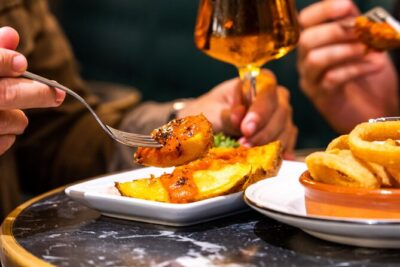
Gourmet Tapas and Wine Tour in Palma de Mallorca
Read our review →Browse the lists this tour appears in