
Reviewed · PALMA OLD TOWN TOURS
Palma de Mallorca: Guided Tour of the Old Town
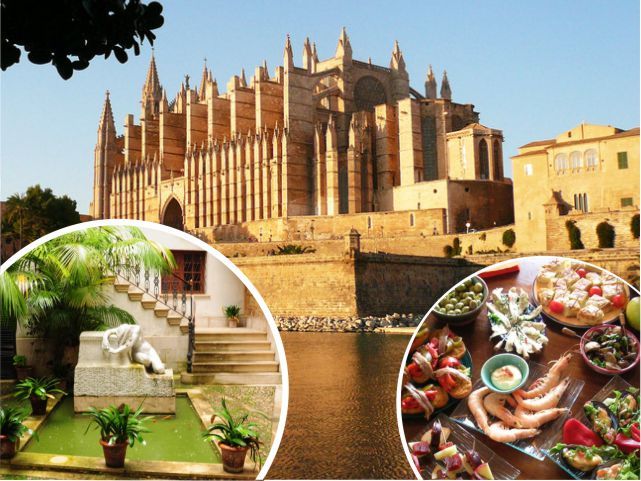
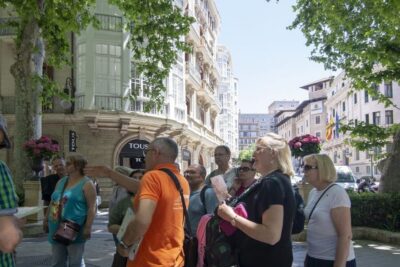
Palma’s old town is a layered place, and this tour gets you into those layers quickly. In about two hours, you move from the great Gothic bulk of La Seu Cathedral to quiet courtyards, medieval walls, noble palaces, the Jewish Quarter, and lively market streets. The stories focus on the people who shaped Palma, including Guillem Sagrera, Pere Morey, and followers of Antoni Gaudí.
I like the mix of major sights and smaller details, especially the ornate patios hidden inside old homes. I also like the human touch: guides such as Maja and Yvonne explain history, architecture, food, and local life rather than simply pointing at monuments. The main consideration is that entrance fees, food, and drinks are not included, and the tour is not suitable for wheelchair users.
In This Review
- Key points at a glance
- Why Palma’s old town rewards a guided walk
- Starting near Av. d’Antoni Maura
- La Seu, Palma’s great Gothic marker
- La Lonja and Palma’s Mediterranean commerce
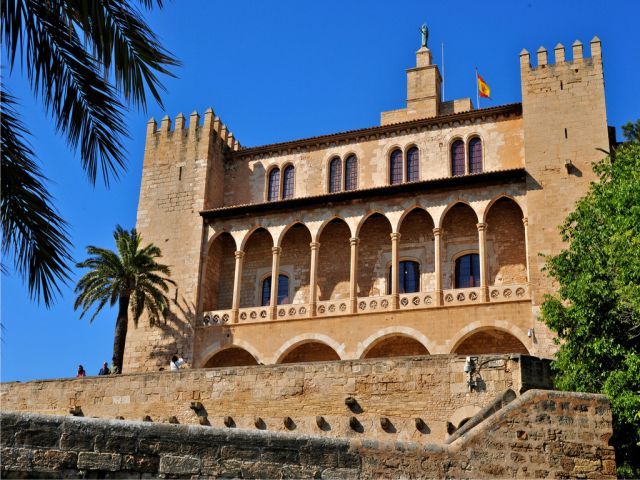
- Almudaina Palace and the public face of power
- Patios, palaces, and the quieter side of Palma
- The Jewish Quarter and the old city walls
- Plaça Cort, BORN, and civic Palma
- A taste of the market hall, without a meal included
- The guides: Maja, Maya, and Yvonne
- Is $46 good value for two hours?
- Who should book this walk?
- Should you book Palma’s old town tour?
- FAQ
- How long does the Palma old town tour last?
- What language is the regular guided tour?
- Which main sights are included in the walking route?
- Are entrance fees included?
- Are food and drinks included?
- Where does the tour start and finish?
- Is the tour suitable for wheelchair users or large luggage?
Key points at a glance
- La Seu and La Lonja in one walk: See two of Palma’s most important historic buildings from the outside while learning why the medieval port mattered so much.
- Patios and palaces: Look beyond the headline sights for ornate courtyards, city mansions, gardens, and civic buildings.
- Guides with a local feel: Maja and Yvonne have led recent tours, with explanations that cover history, architecture, culture, and practical food advice.
- German join-in tour: The regular guided option is in German, with private tours available in English, French, or German.
- Market hall finish: The route includes Palma’s lively market hall, a useful stop for seeing the island’s Mediterranean food culture.
- A compact introduction: The walk lasts 105 minutes to two hours, making it a good first look at Palma without taking over your day.
Why Palma’s old town rewards a guided walk
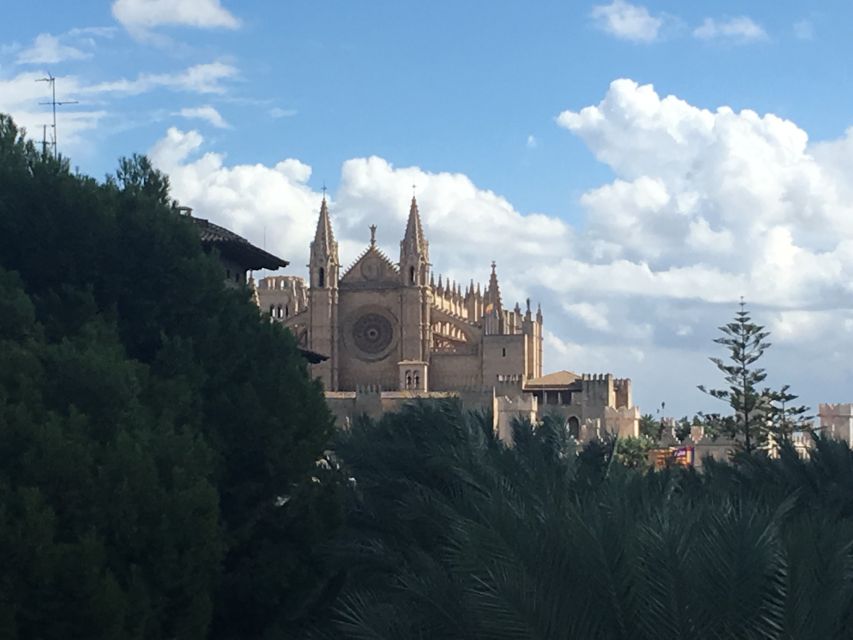
Palma can look easy on a map. The main sights sit close together, but the old town’s narrow streets, changing building styles, and enclosed courtyards make it easy to miss the connections. A guide gives you the thread that links a cathedral, a merchant exchange, a palace, a city wall, and a market.
I find the historical angle especially useful here. Palma grew during the period when the Mediterranean was the main economic highway of Europe. The route uses that past to explain why powerful merchants, church leaders, government officials, architects, and noble families all left their mark within a fairly compact area.
You are not signing up for a museum visit with long indoor stops. This is a walking tour, and the emphasis is on seeing the city in context. That makes it a smart first activity if you want to decide later which buildings deserve a separate paid visit.
More walks through Palma old town:
- Palma de Mallorca: Old Town Atmospheric Evening Tour
★ 4.8 · 706 reviews - Palma de Mallorca Old Town Guided Bike Tour (Small Groups)
★ 4.6 · 563 reviews - Palma de Mallorca: Foodie Walking Tour of the Old Town
★ 4.6 · 372 reviews
Starting near Av. d’Antoni Maura
The listed starting point is at Av. d’Antoni Maura, 22, though the exact meeting place can depend on the option you book. Check your confirmation carefully rather than assuming every version of the tour begins in precisely the same spot.
The area is a practical launch point for the old town and the waterfront side of Palma. From there, the walk leads into the historic center and returns to the same general address area for drop-off. Since the route is on foot, I would arrive with comfortable shoes and leave large luggage elsewhere. Large bags are not allowed.
The timing is listed as 105 minutes to two hours. That small difference matters if you are arranging a meal, a museum visit, or a ferry connection. I would allow the full two hours, plus a little time at the meeting point, so you are not rushing away from the final stop.
La Seu, Palma’s great Gothic marker
La Seu Cathedral is the visual anchor of Palma. Even when you are viewing it from outside, its scale helps you understand the ambition and wealth of medieval Mallorca. The tour connects the cathedral with architect Guillem Sagrera and the long building tradition behind this landmark.
This is one of the places where a guide adds real value. A quick photograph can tell you that the cathedral is large and impressive, but it cannot explain how the building fits into Palma’s religious, political, and economic story. The guide also places the cathedral alongside the nearby secular buildings, so you see the old town as a working center rather than a collection of isolated monuments.
Do not expect the entrance fee to be covered. Admission is excluded, so you will need to arrange and pay separately if you want to return inside or add an interior visit. For many people, the outdoor explanation is enough for a first orientation, while others may prefer to schedule the cathedral as a separate stop.
La Lonja and Palma’s Mediterranean commerce
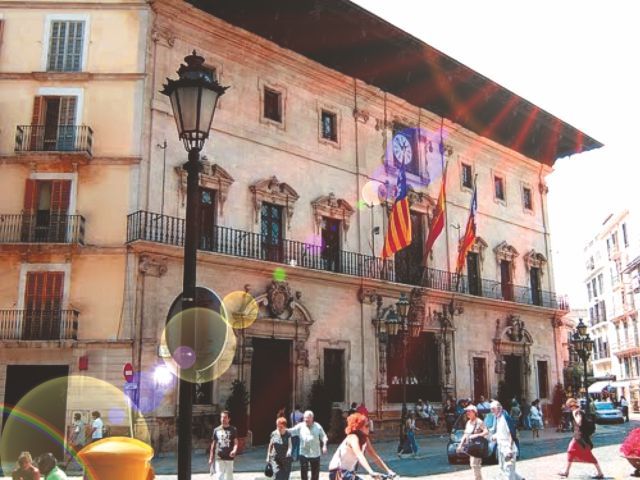
Near the cathedral, La Lonja recalls the era when merchants used Palma as part of the Mediterranean trading network. This former exchange is one of the clearest reminders that the old town was not built only for worship or royal ceremony. Money, shipping, trade, and civic power shaped the streets around it.
The building also gives the guide a chance to discuss Guillem Sagrera and the skill of the medieval builders. You get more than a list of dates. The point is to understand how architecture reflected the city’s position and the ambitions of the people who funded it.
The tour also takes in the Consolat de Mar, another important civic and maritime reference. Together, La Lonja and the Consolat help explain Palma’s commercial past. If your interest is limited to royal palaces and cathedrals, these stops may feel less immediate, but they are valuable for understanding why Palma became such an important city.
More things to do in Palma:
- Palma: Cathedral of Mallorca Skip-the-Line Entry Ticket
★ 4.6 · 14,386 reviews - Palma de Mallorca: 5-Hour Catamaran Cruise with Lunch & Swim
★ 4.5 · 9,957 reviews - Palma de Mallorca: City Sightseeing Hop-On Hop-Off Bus Tour
★ 4.1 · 4,450 reviews - Palma de Mallorca: Sunset Boat Tour
★ 4.6 · 2,894 reviews
Almudaina Palace and the public face of power
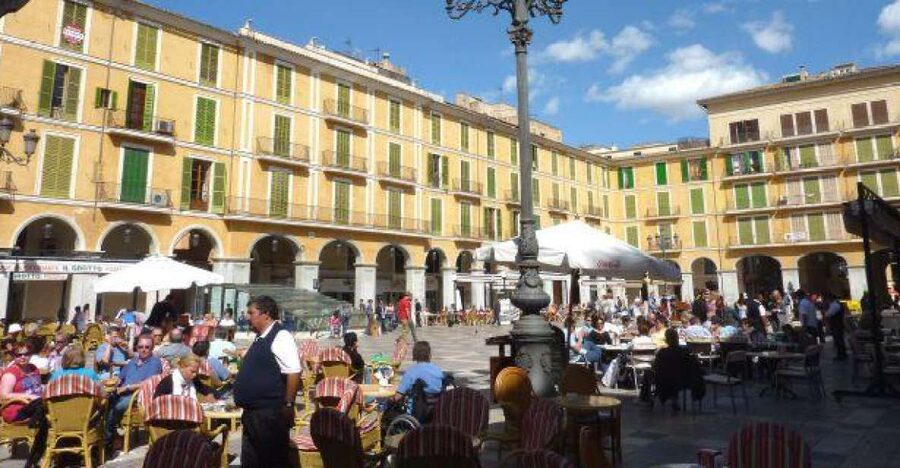
The Almudaina Palace adds a royal and administrative layer to the walk. Along with the government building and the episcopal palace, it shows how authority was distributed through Palma’s old center. Religious power, royal power, and civic power all sat within a short walk of one another.
The tour does not include entrance fees, so the palace is primarily part of the guided outdoor route unless you make a separate visit. That is worth knowing if you have your heart set on exploring interiors. The guide’s job here is to explain the building’s role and place it within the wider story of the city.
I like this part of the route because it keeps the walk from becoming a parade of pretty façades. You are shown how the buildings worked as institutions. That kind of context makes the next palace, square, or monument easier to read.
Patios, palaces, and the quieter side of Palma
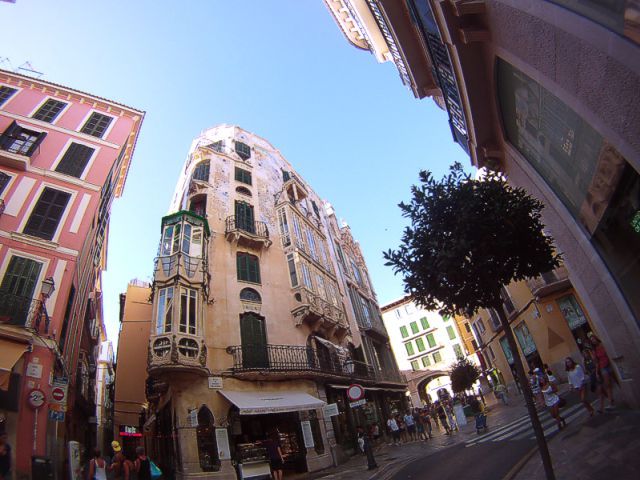
The ornate patios are among the most appealing details on this experience. These inner courtyards can be easy to pass without noticing, since their most interesting features are often tucked behind street entrances. They reveal another side of Palma, one connected with private homes, old families, gardens, and elegant urban design.
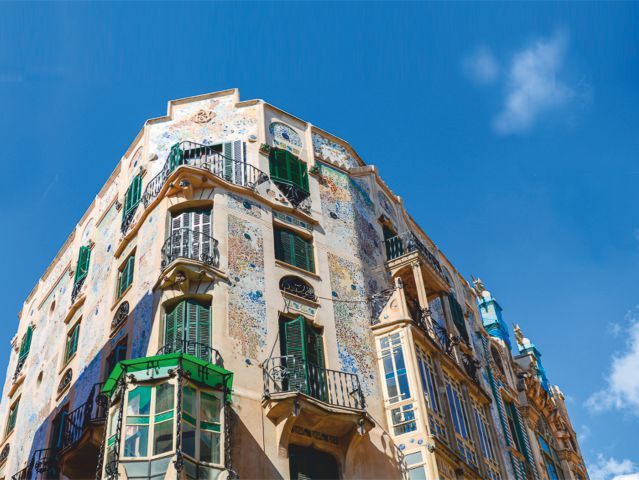
The route also includes city palaces, manors, squares, and secular buildings. Some of these may not have the instant fame of La Seu, but they are exactly the kind of places that benefit from a guide’s explanation. Architecture becomes easier to understand when someone points out how local styles changed and how disciples of Antoni Gaudí influenced palaces and grand homes.
Palma’s Modernisme buildings add a later chapter. Their decorative details contrast with the older Gothic and medieval structures, giving you a useful lesson in how the city kept changing rather than freezing in one period. I would keep your eyes up, but also look around doorways and courtyards. The smaller details are often the reward.
The Jewish Quarter and the old city walls
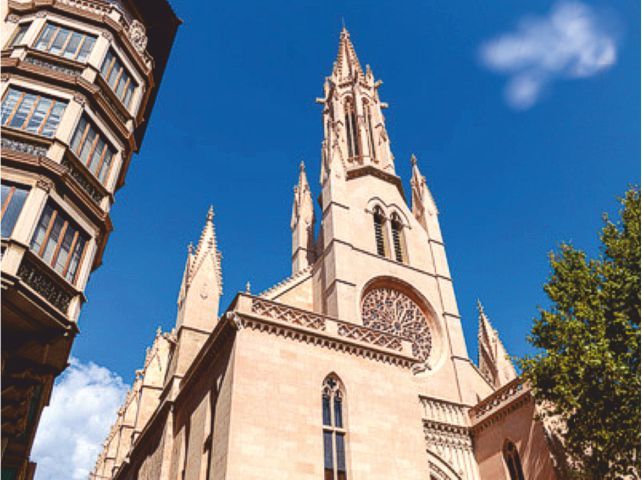
The Jewish Quarter brings another important part of Palma’s past into view. The tour presents it as part of the old town’s changing communities and eventful history, not as a detached sightseeing stop. That makes the area more meaningful than a simple walk through attractive lanes.
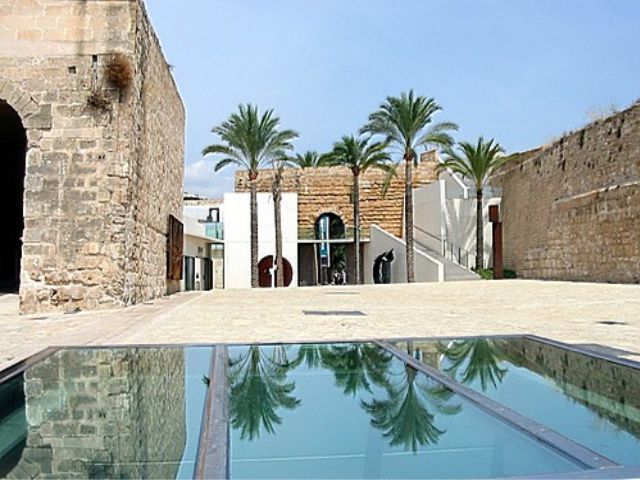
The city wall adds a physical sense of Palma’s former defenses. Walls are easy to treat as scenery, but they tell you where the old city ended and how movement, security, and trade were organized. From this part of the route, the historic center feels less like a maze and more like a planned medieval city.
Because this is a walking tour rather than a focused Jewish-history or military-history program, the amount of time devoted to each topic may be limited. If one of these subjects is your main interest, use the tour as an introduction and ask the guide for suggestions on what to explore afterward.
Plaça Cort, BORN, and civic Palma
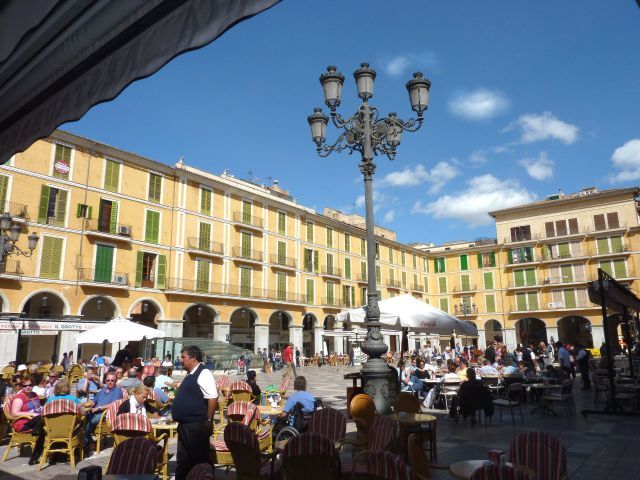
Plaça Cort brings the city’s civic life into the route. It is a useful counterpoint to the cathedral and palace areas, showing that Palma’s old center still functions as more than a preserved monument district.
BORN adds another recognizable part of central Palma to the walk. The route links streets, squares, public buildings, and monuments so you can understand their relationship rather than seeing each one as a separate photo stop.
The appeal here is orientation. By the end of the walk, you should have a clearer sense of where the main parts of the old town sit. That helps if you plan to return for shopping, a meal, a museum, or a more leisurely look at the buildings.
A taste of the market hall, without a meal included
The lively market hall provides a change of pace from stone façades and historic institutions. You get an impression of Mediterranean food culture and the culinary variety of the island while walking through an active local setting.
Food is not included, and neither are drinks. I see that as a fair arrangement for a short city walk because it keeps the price clear and lets you choose what you want to buy. Still, do not arrive expecting a tasting session or a hosted lunch.
This is a good place to ask for practical food advice. One recent tour with Yvonne covered restaurant tips along with Palma’s history, from the island’s first settlement through the present day. That kind of guidance can save you from spending your first evening in a place chosen only for its location.
The guides: Maja, Maya, and Yvonne
Recent departures have been led by Maja, also written as Maya in one booking note, and by Yvonne. The strongest pattern in the feedback is not one particular monument. It is the guides’ ability to make two hours feel lively while answering questions about history, culture, architecture, famous island figures, and food.
Maja is described as giving an entertaining tour with detailed knowledge and a strong sense of Palma as a local would explain it. Yvonne’s tours have covered the city from its earliest settlement to modern life, with anecdotes about notable people connected with Mallorca.
That matters because the route contains many names and periods. A dry list of architects can blur together. A guide who explains why Pere Morey, Guillem Sagrera, or Gaudí’s followers matter gives you useful hooks for remembering what you see.
The regular join-in tour is German-speaking. Private tours are offered in English, French, and German, which is the better choice if language, pace, or group privacy is important to you. The supplied information also lists private or small-group availability, but you should confirm the exact format when booking.
Is $46 good value for two hours?
At $46 per person, this is not the cheapest way to walk around Palma. You can explore the streets on your own for nothing, and many exterior sights cost nothing to view. The question is what you want your money to do.
I think the price can make sense if you want a connected explanation of the old town, especially on a first visit. You are paying for a guide who can join the cathedral, merchant exchange, palaces, Jewish Quarter, walls, Modernisme buildings, patios, and market hall into one story.
The value is less clear if you already know Palma well or prefer to set your own pace. You may want to stop for photographs, enter several buildings, or linger over lunch, while a guided group needs to keep moving. Since admission, food, and drinks are extra, budget for those separately.
For a private or small-group option, the price may be easier to justify if you value questions and a more personal pace. For the regular German-language walk, the strongest reason to book is the guide’s interpretation, not admission to attractions.
Who should book this walk?
I would recommend it to first-time visitors who want a compact orientation before exploring on their own. It also suits anyone interested in architecture, urban history, medieval trade, civic buildings, or the way Palma’s old families shaped the city.
The tour is particularly useful if you speak German and want a live explanation rather than relying on a printed guide. German-speaking families, couples, and small groups should find the format easy to use, while private options give English- and French-speaking customers a direct alternative.
It may not suit you if you need step-free access, since the activity is not suitable for wheelchair users. It is also a poor match if you are carrying large luggage or want a food tour with included tastings.
Wear comfortable shoes. The exact route and meeting point can vary by booking option, so check those details before setting out.
Should you book Palma’s old town tour?
Book it if you want Palma explained rather than simply photographed. The strongest part is the connection between headline sights such as La Seu and La Lonja and quieter details such as patios, civic buildings, the Jewish Quarter, and market life.
I would choose the tour early in your stay, then return to the places that catch your interest. Choose a private option if you need English or French, want more time for questions, or prefer not to follow a join-in group.
Skip it if you already have a detailed plan, dislike walking tours, or mainly want interior access to the cathedral and palace. Those entrance fees are separate, and this experience is built around outdoor interpretation. At $46, it earns its price through the guide and the story of Palma, not through included tickets or meals.
FAQ
How long does the Palma old town tour last?
The duration is listed as 105 minutes to two hours. Check the available starting times and the details of your selected option when booking.
What language is the regular guided tour?
The live tour guide for the join-in option speaks German. Private tours are available in English, French, and German.
Which main sights are included in the walking route?
The route includes La Seu Cathedral, La Lonja, Almudaina Palace, BORN, Plaça Cort, the Consolat de Mar, the Jewish Quarter, the government building, the episcopal palace, the city wall, historic palaces, patios, and the market hall.
Are entrance fees included?
No. Entrance fees are not included in the $46 tour price.
Are food and drinks included?
No. Food and drinks are not included. The walk through the market hall gives you an impression of Palma’s Mediterranean food culture.
Where does the tour start and finish?
The listed start and drop-off address is Av. d’Antoni Maura, 22, but the meeting point may vary depending on the option you book. Check your booking details before arrival.
Is the tour suitable for wheelchair users or large luggage?
The activity is not suitable for wheelchair users, and large bags or luggage are not allowed. Comfortable shoes are recommended.
Just added around Mallorca
- Discover the major cultural attractions of Palma De Mallorca on a Private Tour★ 4.5 · 3 reviews
- Wine Tasting – wines from the smallest wineries 3 wines★ 5.0 · 3 reviews
- Extreme e-scooter off-road excursions★ 5.0 · 3 reviews
- Full-day Tour to Drach Caves and Portocristo Town★ 4.0 · 3 reviews
- Gaudí and Modernist Art: Guided Tour in Palma de Mallorca★ 4.5 · 3 reviews
- Mallorca Beyond the Guidebooks – Tour with the famous Author★ 5.0 · 3 reviews
- Peguera: The lovely Magical Creatures of Peguera,family walk★ 3.1 · 3 reviews
- Mallorca: Speleo-Coasteering Tour along the Coast of Alcudia★ 5.0 · 3 reviews
Palma Old Town Tours, compared.
Palma de Mallorca Old Town Guided Bike Tour (Small Groups)
Read our review →

Browse the lists this tour appears in