
Reviewed · MALLORCA
Secrets of Jewish Majorca – Half Day Experience
Palma’s Jewish past is not laid out in one grand monument. You find it in narrow streets, family names, old workshops, memorial stones, and the story of the Xueta families who faced discrimination for centuries. This private walk brings those pieces together, including a secret tunnel in a ceramics workshop and the streets where Xueta families lived until as recently as the 1960s.
I like two things right away. First, the tour goes beyond the usual old-town sights and explains forced conversions, the Inquisition, and Crypto-Jews who practiced Judaism privately while publicly identifying as Catholic. Second, the group visits a bakery with a medieval oven dating to 1652, an unusual way to connect food with local history. The main concern is value: at $259.29 per person, this is a costly four-hour experience, and guide quality and some advertised stops may need confirmation.
In This Review
- Key things to know before you book
- Palma’s Jewish story begins in ordinary streets
- The Xueta streets make the story personal
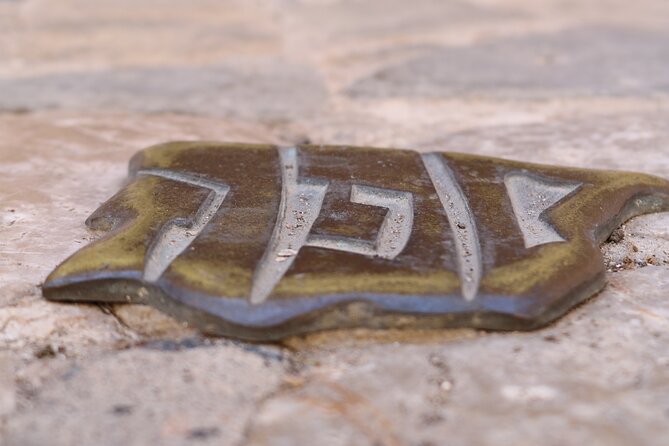
- A tunnel inside a ceramics workshop
- Memorial stones and the wider story of persecution
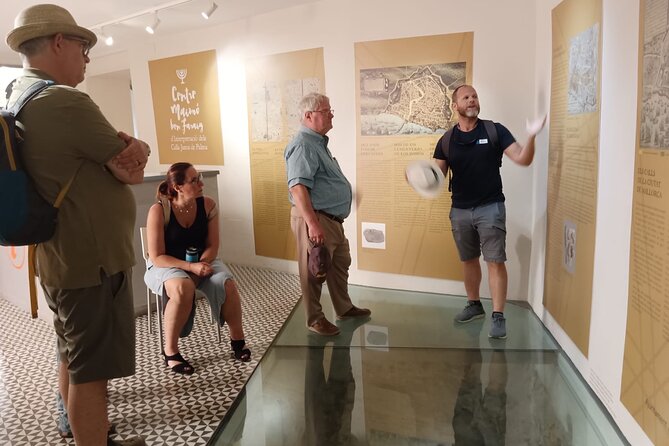
- Centre Maimó Ben Faraig adds a museum stop
- Panaderia Fiol and the 1652 oven
- Private touring changes the pace
- Is $259.29 per person fair value?
- Timing, meeting point, and practical planning
- Who will get the most from this Palma experience?
- Should you book Secrets of Jewish Majorca?
- FAQ
- Where does the tour begin?
- Where does the tour end?
- How long does the experience last?
- Is this a private tour?
- What places are included?
- Are food and drinks included?
- Can I cancel for a full refund?
Key things to know before you book
- The main story is Palma’s Xueta community: You’ll visit streets linked to families who remained socially marginalized for generations.
- A secret tunnel adds a memorable twist: The route enters a tunnel inside a ceramics workshop, rather than staying only on public streets.
- The tour is private: Only your own group takes part, which allows more room for questions and a slower look at the places that matter to you.
- The old Jewish Quarter takes up most of the time: About three hours are assigned to Palma’s historic quarter and related sites.
- Food is part of the historical discussion: Panaderia Fiol has a medieval oven from 1652, and the tour connects the ensaimada pastry with old religious prejudice.
- Check current details before paying: A former Jewish shop connected with the experience reportedly no longer exists, so ask what will actually be included on your date.
Palma’s Jewish story begins in ordinary streets
Meet your guide at Starbucks on Plaça de Cort, 1, in central Palma. This is a practical starting point, since the square sits in the old center and puts you close to the entry point of the former Jewish Quarter.
You begin at the Jewish Quarter Interpretation Center. From there, the tour explains how Jewish quarters in Catalan-speaking parts of Spain are often marked by the words Carrer de Call, meaning the street of the Jewish quarter. That small language lesson helps you read the old city as you walk, rather than treating it as a series of unrelated lanes.
The first section lasts about three hours, so the pace and the guide matter. You will spend much of the morning or afternoon hearing about the Inquisition, forced conversions, and the emergence of Crypto-Jews. These were people who publicly professed Catholicism while privately maintaining Jewish practices and identity.
That history is difficult, but it is also the reason this tour has more substance than a simple walk past old buildings. Palma’s Jewish story is not only about the medieval community. It is also about what happened after official pressure forced people to change their public lives, and how the consequences continued for families long afterward.
Other Mallorca trips people book alongside this one:
- Palma: Cathedral of Mallorca Skip-the-Line Entry Ticket
★ 4.6 · 14,386 reviews - Palma de Mallorca: 5-Hour Catamaran Cruise with Lunch & Swim
★ 4.5 · 9,957 reviews - Porto Cristo: Caves of Hams Entry Ticket
★ 4.2 · 6,548 reviews
The Xueta streets make the story personal
One of the most important parts of the walk takes you through the streets where Xueta families lived for centuries. The Xueta were a specifically Mallorcan group associated with Jewish ancestry and converted Jewish families. The experience presents their story through the places where they lived and worked, rather than only through dates and names.
You may still see traces of that past in family businesses. The tour points out jewelry shops that have remained in the same families for generations. That detail gives the history a human scale. You are not simply hearing that a group faced prejudice. You are looking at streets where descendants continued their lives and businesses under the weight of an old label.
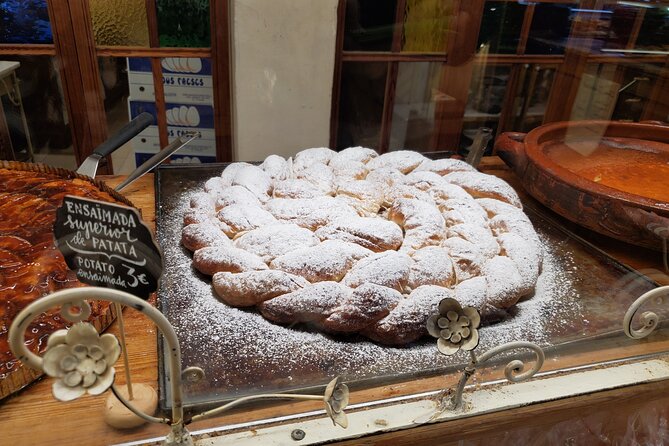
The story also reaches into local food. The ensaimada, Mallorca’s famous spiral pastry, is discussed in connection with pork fat. The explanation presented on the tour is that the use of pork fat became a response to centuries of prejudice and suspicion. Food here is not just a snack. It becomes evidence of how public religious identity could affect daily customs.
I would listen carefully and ask questions during this part. Family history, social labels, and religious practice can be complicated. A private group makes it easier to pause when a detail needs explanation, and you will not be trying to catch every word over a large crowd.
A tunnel inside a ceramics workshop
The route includes entry into a secret tunnel in a ceramics workshop. This is one of the experience’s most unusual details, but you should keep your expectations sensible. The tunnel is an atmospheric historical stop, not a major underground attraction with a long series of chambers.
Its value comes from the setting. You move from the public streets into a working craft space, then into a concealed passage connected with Palma’s older urban fabric. That change of scene can make the past feel less abstract. It also gives the tour a physical surprise after the opening discussion at the interpretation center.
Because access is through a workshop, conditions may depend on the business being open and the route being available that day. I would confirm this before booking if the tunnel is the main reason you are interested in the experience.
Memorial stones and the wider story of persecution
The walk also includes memorial plaques, or Stolpersteine, connected with the Spanish Civil War. These small markers are designed to remember people affected by persecution and political violence. They add a later chapter to a tour that begins with Jewish life and religious persecution in earlier centuries.
This portion can broaden your understanding of Palma. The route is not limited to a neatly contained medieval subject. It connects Jewish identity, forced conversion, community memory, and twentieth-century political violence. That makes the four hours feel like a study of how difficult history remains visible in the city.
The subject matter is serious, so this may not be the right choice if you want a light sightseeing walk. You will hear about discrimination and fear, not only architecture and old streets. For visitors with a strong interest in social history, that seriousness is the point.
Same island, a completely different kind of day:
- Palma de Mallorca: City Sightseeing Hop-On Hop-Off Bus Tour
★ 4.1 · 4,450 reviews - Mallorca: Island Tour with Boat, Tram & Train from the South
★ 4.4 · 3,888 reviews - Port d’Alcudia: North Coast Catamaran Cruise with Meal
★ 4.5 · 2,978 reviews - Palma de Mallorca: Sunset Boat Tour
★ 4.6 · 2,894 reviews
Centre Maimó Ben Faraig adds a museum stop
The second stop is the Centre Maimó Ben Faraig, where you spend about 30 minutes. The supplied details identify it as a museum, but do not give a full description of its displays. You should therefore treat it as a compact interpretive stop rather than plan your entire visit around a large museum collection.
The center helps break up the walking portion. After several hours in Palma’s streets, a dedicated indoor setting can give the subject more structure. It is also a useful place to ask your guide for clarification about terms such as Xueta, Crypto-Jew, and Jewish quarter.
Since admission is included and no separate entry charge is listed, you do not need to budget an extra museum fee. Still, the stop is short. If you prefer to read every panel at length, you may find the 30-minute visit too brief.
Panaderia Fiol and the 1652 oven
The final listed stop is Panaderia Fiol, a modern bakery with a medieval oven dating to 1652. This is a pleasing change of rhythm after the heavier historical material. You get a look at a food business using a very old baking space, while the guide connects Mallorcan food traditions to the island’s complicated religious past.
The stop lasts about 30 minutes. Coffee, tea, breakfast, lunch, and snacks are not included, so you should not book this expecting a meal or a pastry tasting package. The bakery is a visit, not a promised food tour.
This is also the place where you should ask what is currently operating. One account of the experience says that a Jewish shop once associated with the operators and the end of the route no longer exists. The present details specifically name Panaderia Fiol, so confirm the final stop when you reserve. A quick message can prevent disappointment if an older version of the route still appears in promotional material.
Private touring changes the pace
This is a private activity. Only your group participates, which is a meaningful advantage in Palma’s old center. You can ask direct questions about family names, religious customs, the Inquisition, or the streets you are seeing without waiting for a large group to catch up.
The private format also helps if your interests are specific. If you want more time on Xueta history and less time on general city sightseeing, tell the guide at the start. The information provided does not promise a named guide, so you cannot choose a particular historian in advance.
Guide quality is an important consideration here. One very positive account describes a wonderful guide and an extremely interesting private tour. Another describes a pleasant guide who was not sufficiently informed, along with a disorganized experience. That contrast suggests you should confirm who will lead the tour and ask about the current route before your booking becomes nonrefundable.
The overall rating is 4.6 from 11 ratings, with 91 percent recommending the experience. That is encouraging, but the small number of ratings means I would not treat the score as a guarantee. This subject needs careful explanation, and the guide’s preparation can shape your day.
Is $259.29 per person fair value?
The price is $259.29 per person. That places the experience in the expensive range for a four-hour city walk, especially since food and drinks are not included and the listed sites have no separate admission charge.
The price makes more sense if you are traveling as a small private group and want a focused introduction to a subject you would struggle to piece together alone. You are paying for a dedicated guide, a specialized route, and the convenience of having the story connected across several sites. If your group is large enough to benefit from a group discount, the per-person cost may become easier to justify.
The value is weaker if you expect major museum access, a meal, shopping, or a long list of formal attractions. This is primarily a guided historical walk with two short indoor visits. The experience’s worth rests on interpretation and access, not on expensive admissions.
I would compare the cost with your priorities. If Jewish history, the Xueta community, and Palma’s less obvious streets are central to your visit, the private format may be worthwhile. If you simply want to see Palma’s old town, you can find more affordable ways to walk around it.
Timing, meeting point, and practical planning
The experience lasts about four hours and begins at Starbucks on Plaça de Cort. It returns to the same meeting point, so you do not need to arrange transport from a distant neighborhood at the end.
The timing is divided roughly into three hours in Palma’s Jewish Quarter and related sites, 30 minutes at Centre Maimó Ben Faraig, and 30 minutes at Panaderia Fiol. The route is therefore weighted toward walking and discussion. Wear comfortable shoes and leave room in your schedule for a thoughtful, not rushed, historical visit.
Most people can participate. No special accessibility details are provided, so ask the operator about the walking surfaces, workshop access, tunnel entry, and museum arrangements if anyone in your group has mobility concerns.
Confirmation is sent within 48 hours, subject to availability. Free cancellation is available if you cancel at least 24 hours before the local start time. Changes or cancellations inside that window are not accepted, and poor weather may lead to a new date or a full refund.
Who will get the most from this Palma experience?
I would recommend this tour most strongly to you if you enjoy local history that reaches beyond royal buildings and famous churches. It suits visitors who want to understand how religious identity shaped family life, business, food, and social status in Mallorca.
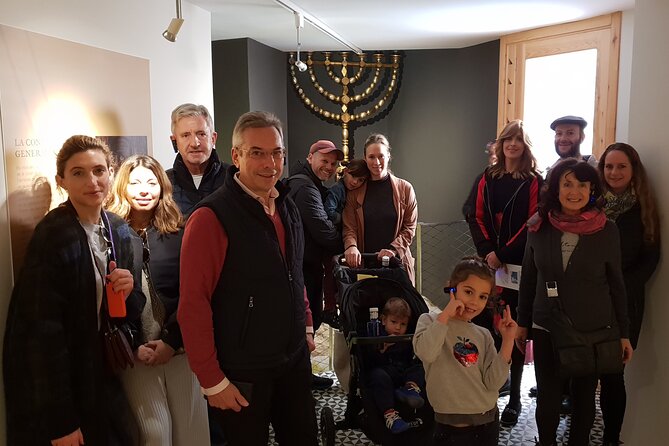
It is also a good fit for a family group or a small party with mixed knowledge. The private setting lets the guide adjust explanations, and the tunnel, bakery, and jewelry-shop connections give the subject concrete points of interest.
You may want to skip it if you prefer a relaxed food walk, a broad introduction to Palma, or a tour with many major sights. The material is focused and serious. The price is high, and the quality depends heavily on the person leading your group.
Should you book Secrets of Jewish Majorca?
Book it if you want a private, specialized look at Palma’s Jewish and Xueta past, and if you value a guide’s interpretation more than included admissions or food. The strongest features are the family streets, the discussion of Crypto-Jews, the ceramics-workshop tunnel, and the 1652 bakery oven.
Before paying, ask two direct questions: Who is guiding the tour, and which stops are operating now? That matters because one former Jewish shop is no longer available, and the quality of the guiding has not been consistent for every group.
With those details confirmed, this can be a thoughtful and unusual half-day in Palma. Without that confirmation, $259.29 per person is too much to spend on an uncertain route.
FAQ
Where does the tour begin?
It begins at Starbucks, Plaça de Cort, 1, in central Palma, Mallorca.
Where does the tour end?
The activity ends back at the starting meeting point.
How long does the experience last?
The experience lasts approximately four hours.
Is this a private tour?
Yes. Only your group participates in the activity.
What places are included?
The route includes Palma’s former Jewish Quarter, the Jewish Quarter Interpretation Center, a secret tunnel in a ceramics workshop, memorial plaques or Stolpersteine, Centre Maimó Ben Faraig, and Panaderia Fiol.
Are food and drinks included?
No. Coffee, tea, breakfast, lunch, and snacks are not included.
Can I cancel for a full refund?
Yes, if you cancel at least 24 hours before the experience starts. Cancellations or changes made less than 24 hours before the local start time are not accepted.
Just added around Mallorca
- Discover the major cultural attractions of Palma De Mallorca on a Private Tour★ 4.5 · 3 reviews
- Wine Tasting – wines from the smallest wineries 3 wines★ 5.0 · 3 reviews
- Extreme e-scooter off-road excursions★ 5.0 · 3 reviews
- Full-day Tour to Drach Caves and Portocristo Town★ 4.0 · 3 reviews
- Gaudí and Modernist Art: Guided Tour in Palma de Mallorca★ 4.5 · 3 reviews
- Mallorca Beyond the Guidebooks – Tour with the famous Author★ 5.0 · 3 reviews
- Peguera: The lovely Magical Creatures of Peguera,family walk★ 3.1 · 3 reviews
- Mallorca: Speleo-Coasteering Tour along the Coast of Alcudia★ 5.0 · 3 reviews