
Reviewed · SOLLER TOURS
Sóller: Jardines de Alfabia Entrance Ticket
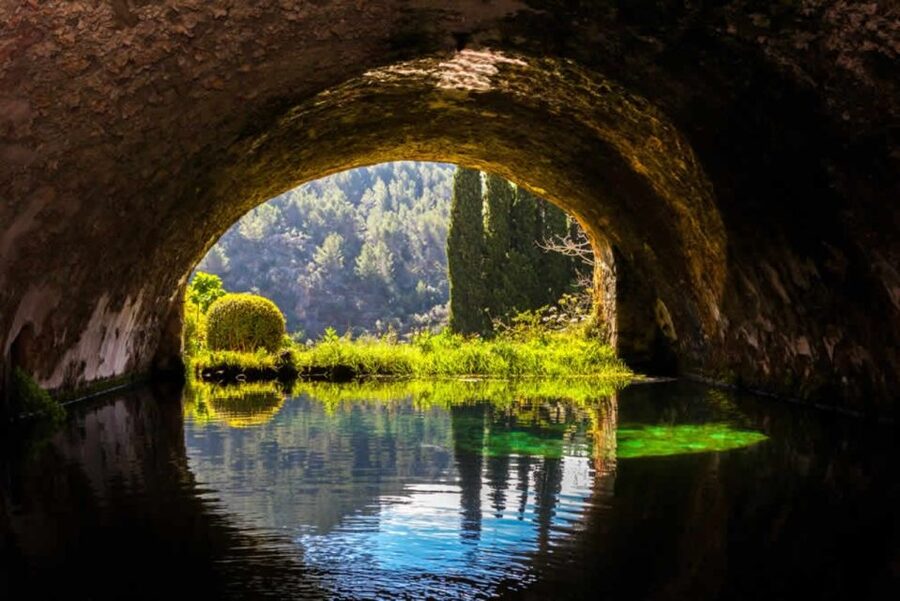
Alfabia gives you two worthwhile sights for one modest admission: a 500-year-old Mallorcan house and cool, water-filled gardens in the Tramontana mountains. I like the way the visit moves from the grand avenue of plane trees into a traditional patio, then indoors through rooms shaped by many centuries.
I also like the strong sense of place. The fountains, hydrangeas, and Arab-style garden design offer a calm break from Mallorca’s busier sightseeing stops. The main drawback is seasonal: in February the gardens can still be charming, but you should not expect a full display of flowers, and some areas may look less carefully maintained.
- Three rows of plane trees: Walk the broad entrance avenue toward the traditional Mallorcan patio.
- Many eras under one roof: See Roman-Andalusian foundations alongside Arabic, Gothic, Renaissance, Baroque, Rococo, and English decoration.
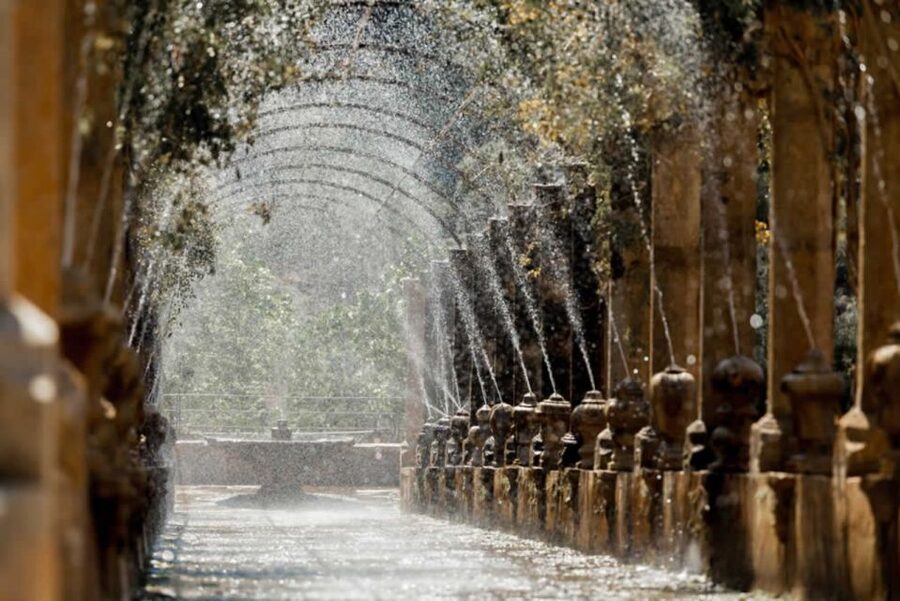
- Water at the center: Fountains and garden channels help explain the cooling, restful feel of the grounds.
- A mountain setting: Alfabia sits in the Serra de Tramuntana, a UNESCO World Heritage Site.
- Simple admission: The $11 ticket covers entrance fees for a one-day visit.
- Flexible planning: You can reach the site from Palma by Line 211 or use the Sóller Train, with schedules worth checking before you leave.
In This Review
- Why Alfabia Is More Than a Garden Stop
- Walking Under the Plane Trees
- The Arab-Style Gardens and Their Cooling Water
- Inside a House Shaped by Centuries
- A Self-Guided Visit With Room to Set Your Pace
- Getting There From Palma and Sóller
- When the Season Changes the Experience
- Who Will Enjoy Alfabia Most
- Practical Tips for a Better Visit
- Is the $11 Ticket Worth It?
- FAQ
- Where is the Alfabia complex located?
- How much does admission cost?
- How long is the ticket valid?
- What does the ticket include?
- Is the visit guided?
- How can I reach Alfabia from Palma?
- Can I use the Sóller Train to reach the area?
- What is the latest time I can enter?
- Can I cancel my booking?
Why Alfabia Is More Than a Garden Stop
Alfabia is a good choice if you want to see a quieter side of Mallorca. The visit is not built around a guide, performance, or tightly timed route. You enter, walk through the grounds, look around the house, and set your own pace.
That freedom matters. You can spend more time with the garden if you enjoy plants and water features, or focus on the house if architecture is your main interest. I would allow at least an hour, though the ticket is valid for one day, so you are not forced to hurry through the complex.
The appeal comes from contrast. Outside, the gardens feel open, shaded, and refreshing. Inside, the rooms show layers of decoration from different periods. Alfabia is not a perfectly uniform historic interior, and that is part of its character. Roman-Andalusian roots sit beside Arabic, Gothic, Renaissance, Baroque, Rococo, and English touches.
You will not find a single design idea carried through every room. Instead, you see how the house changed over time while keeping its older identity. For anyone interested in Mallorca’s long contact with different cultures, that mixture gives the visit substance.
Walking Under the Plane Trees
The approach begins with a wide avenue lined by three lanes of large plane trees. This is one of the most memorable parts of the visit because it creates a clear transition from the road into the estate.
The trees provide shade and a sense of ceremony without feeling overly formal. As you walk forward, the traditional Mallorcan patio comes into view. This is a useful first stop because it connects the grand entrance with the practical, inward-facing style of a local country house.
I would take this stretch slowly rather than treating it as a path to cross quickly. Look at the arrangement of the trees, the changing shade, and the way the avenue frames the buildings. The setting does much of the work here. You are not simply entering a house. You are moving through a planned sequence of outdoor spaces.
The exact feel changes with the season. February can still offer attractive garden scenery, but fewer flowers. In spring, you might find more blooms beginning to open, while the hotter months may make shade and water especially welcome. The site is worth visiting outside peak flowering season, but your expectations should match the calendar.
More things to do in Soller:
- Soller: Sa Calobra & Cala Tuent Speedboat Tour
★ 4.7 · 1,513 reviews - Sóller: Boat Trip to Sa Calobra and Torrent de Pareis
★ 4.4 · 690 reviews - Mallorca: Valldemossa & Soller Tour
★ 4.2 · 615 reviews
The Arab-Style Gardens and Their Cooling Water
The gardens are the heart of the experience for many visitors. Their Arab influence is most apparent in the emphasis on water, shade, and orderly movement through the grounds.
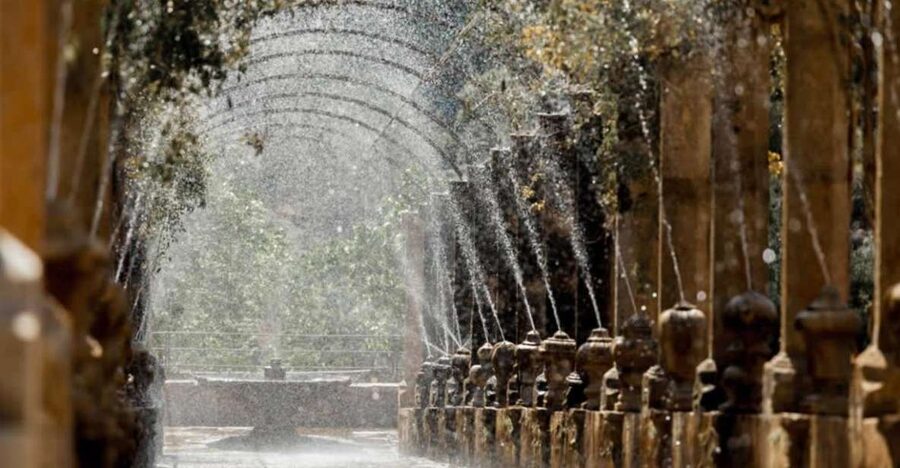
Fountains help make the garden feel cooler and more restful. You will also see hydrangeas and other planted areas, along with clear English influence in the garden design. That combination gives Alfabia a look of its own. It is not a single-period garden reconstructed in one style.
I like gardens that show change rather than pretend to be frozen in time, and Alfabia fits that description. The Arabic elements suggest older ways of managing water and shade, while the English touches point to later taste. The result is a garden with several layers to notice.
Condition can vary. Some sections may look less carefully maintained, and trees can show signs of illness. If you expect every border and tree to look immaculate, you may find the grounds uneven. If you come mainly for the design, shade, fountains, and setting, the garden still offers plenty to see.
The water features are especially useful for families and for anyone who wants a slower visit. You can pause, take photographs, and enjoy the cooler air without needing to follow a guide. Just remember that the last entrance is one hour before closing, so do not leave your arrival until late in the day.
Inside a House Shaped by Centuries
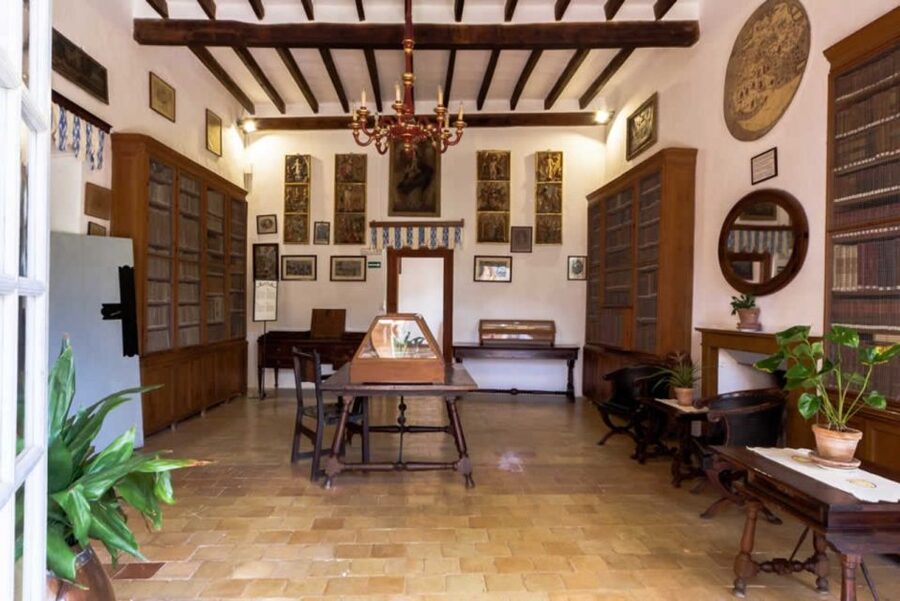
The house gives Alfabia its historical weight. You are looking at one of Mallorca’s oldest buildings, with more than 500 years of history represented in its rooms and structure.
The house combines Roman-Andalusian roots with Arabic, Gothic, Renaissance, Baroque, Roman, Rococo, and English decoration. That list may sound like a lot, and it is. You should enter expecting variety rather than a perfectly matching set of rooms.
This mixture works best when you treat the house as a record of change. Each period left traces. Some details may feel grand, others more domestic, and the overall result is a traditional Mallorcan home shaped by later additions.
I find this kind of building more interesting than a house restored to one narrow date. You can ask yourself what belongs to the original structure, what arrived later, and how the owners adapted the property. The complex presents conservation as an ongoing process, not a return to one supposedly perfect moment.
The visit is also a useful counterpoint to Mallorca’s beaches and resort areas. Here, the focus is on architecture, gardens, and the island’s layered past. You do not need specialist knowledge to appreciate it. Even a casual look at the changing styles gives you a better feel for how local buildings can absorb outside influences.
A Self-Guided Visit With Room to Set Your Pace
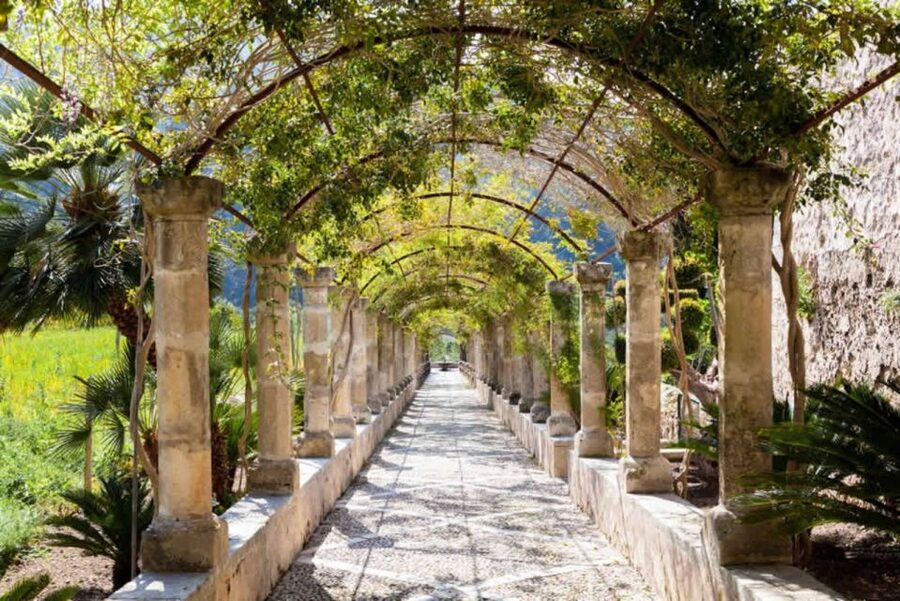
The admission covers entry fees, not a named guide or a guided tour. That makes Alfabia easy to fit around a wider day in the Sóller area, but it also means you should be ready to explore independently.
A self-guided visit has clear advantages. You can stop wherever you like, spend extra time in the garden, and avoid being tied to a fixed group schedule. If you are traveling with people who have different interests, one person can linger by the fountains while another studies the house.
The tradeoff is that you do not have a guide explaining every architectural detail as you go. If you want a formal history lesson, this may feel light. If you prefer to look, think, and take photographs at your own speed, it is a better fit.
An identification bracelet is required during the visit. It is a small practical detail, but you should expect to wear one after entering.
The ticket is listed at $11 per person. For that price, I consider the value good if you plan to see both the house and the gardens. A brief walk through only one section would make the cost feel less attractive, while a relaxed visit gives you a reasonable amount to examine for the admission.
More Mallorca tickets to book ahead:
- Palma: Cathedral of Mallorca Skip-the-Line Entry Ticket
★ 4.6 · 14,386 reviews - Porto Cristo: Caves of Hams Entry Ticket
★ 4.2 · 6,548 reviews - Mallorca: Palma Aquarium Entry Ticket w/ Optional 3D Cinema
★ 4.5 · 2,280 reviews - Mallorca: Dinosaurland and Caves of Hams Combined Ticket
★ 4.5 · 1,167 reviews
Getting There From Palma and Sóller
You can reach Alfabia by public transportation from Palma using Line 211. Check the current departure times on the TIB website before setting out, since the useful connection depends on the day and your starting point.
The Sóller Train is another option, and its timetable should also be checked in advance. The available information confirms the transport options but does not give a full door-to-door route, so you should verify the exact departure and arrival details for your date.
This makes Alfabia a sensible addition to a day focused on the Sóller area, especially if you are already planning to use the train. It may require more planning than a central Palma attraction, but the mountain setting is part of the reason to go.
I would check three things before leaving: the opening hours, the final entry time, and the transport schedule. The last entrance is 60 minutes before closure. Arriving early enough gives you time to walk the avenue, see the garden, and visit the house without watching the clock.
When the Season Changes the Experience
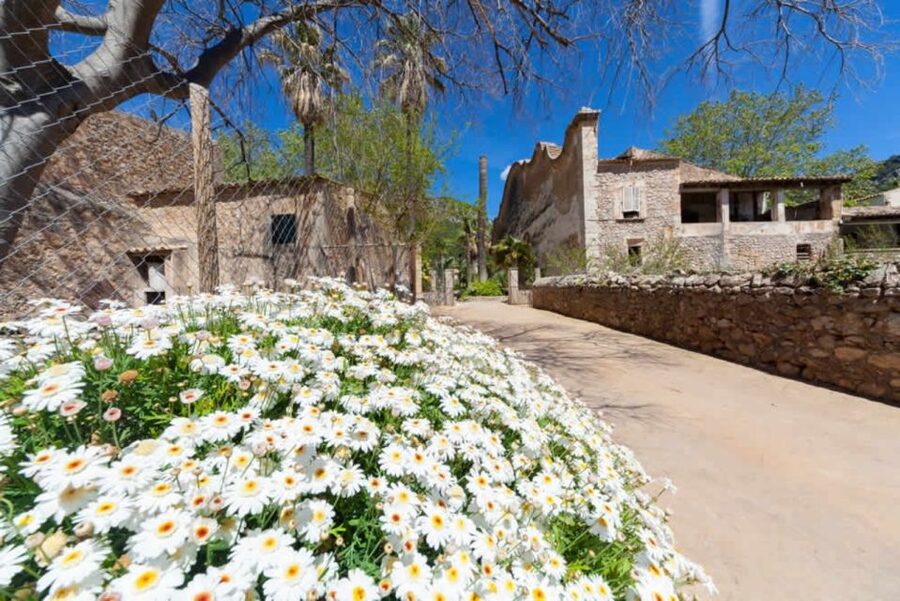
The garden is not equally impressive in every month. In February, the grounds can still feel attractive and peaceful, but flowering is limited. That makes the structure of the garden, the trees, fountains, and house more important than color.
Spring is likely to offer a stronger showing as plants begin to flower. Summer can make the water and shade especially pleasant, though the available information does not specify temperatures or crowd levels. In autumn, the garden may appeal to you more for its calm setting than for a single burst of seasonal color.
One useful lesson is not to judge Alfabia only by its flower display. The estate is also about old trees, water, architecture, and the relationship between the house and the mountains. If you visit outside the main flowering period, focus on those elements.
The condition of the grounds may also vary. Some trees may look unhealthy, and certain areas may seem only moderately maintained. This is a fair reason to lower your expectations of polish, but not necessarily a reason to skip the site if you care about its design and history.
Who Will Enjoy Alfabia Most
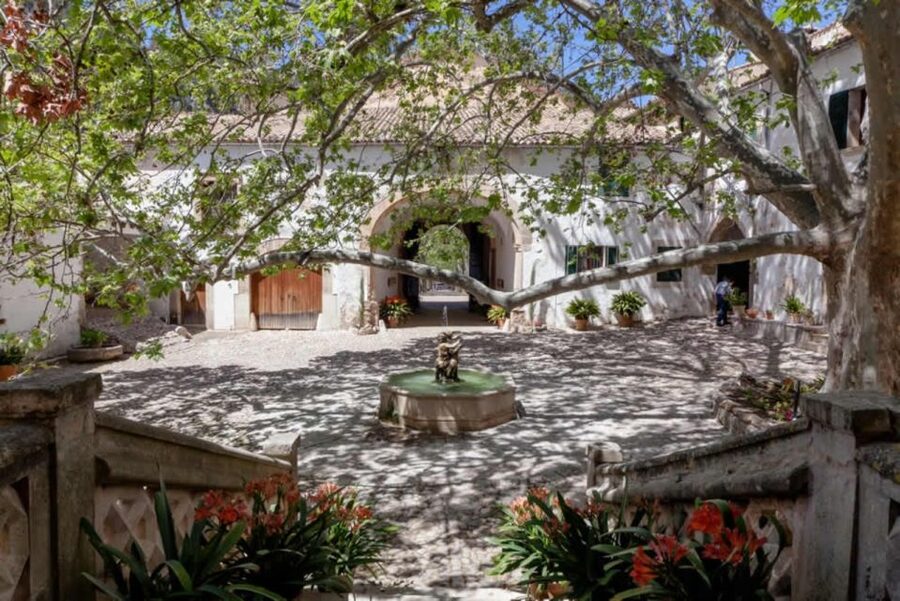
I would recommend Alfabia to several types of visitors:
- You enjoy historic houses more than staged attractions.
- You like gardens with shade, fountains, and different design influences.
- You want a quieter stop connected to the Serra de Tramuntana.
- You prefer exploring without a guide or fixed group.
- You are combining the visit with public transport from Palma or a Sóller Train journey.
- You want a reasonably priced cultural visit rather than an all-day organized tour.
Families may appreciate the open-air setting and water features, though the house requires a slower, more careful style of sightseeing. Garden lovers should plan around the season. Architecture fans will get the most from the unusual mixture of periods.
I would be less likely to recommend it if your main goal is a large flower garden at its peak or a polished, perfectly maintained estate. You may also want more explanation than the self-guided format provides.
Practical Tips for a Better Visit
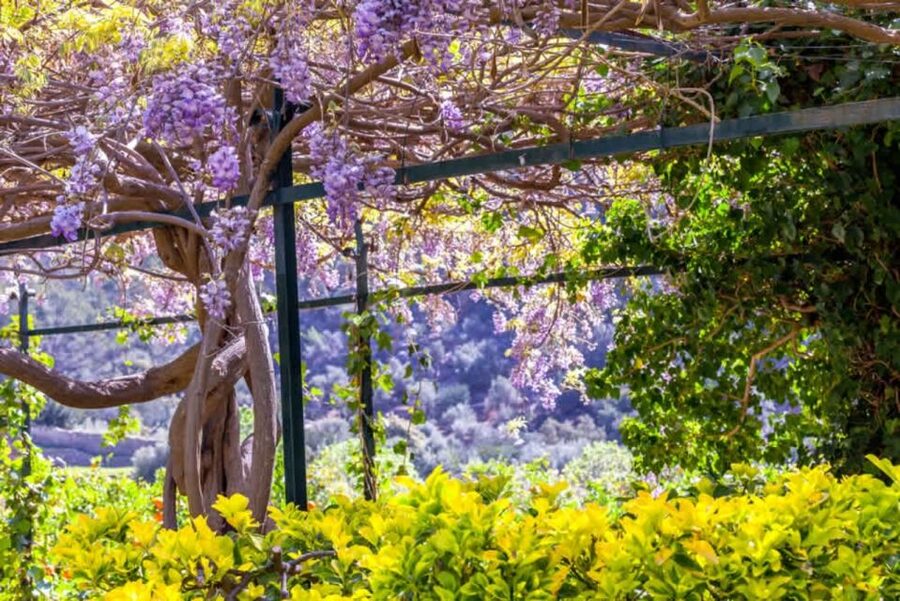
Arrive with enough time to enjoy both halves of the complex. The garden is not just an introduction to the house, and the house is not simply an indoor add-on. Each explains the other.
Start with the avenue and patio. This gives you a visual sense of the estate before you enter the rooms. Then take time with the fountains and hydrangeas instead of walking straight through.
If you are visiting in a cooler month, pay attention to the structure of the garden rather than expecting many flowers. If you are visiting in a warmer period, the shaded paths and water features may become the main pleasure of the stop.
Check transport times before you commit to the visit. Line 211 and the Sóller Train are specifically available options, but schedules matter. Build in enough time to arrive before the final entry window.
For a small extra pleasure, a fresh orange juice made from local oranges is available according to the visit information. It is a fitting choice in Mallorca, especially after walking the grounds, but it is not part of the admission price.
Is the $11 Ticket Worth It?
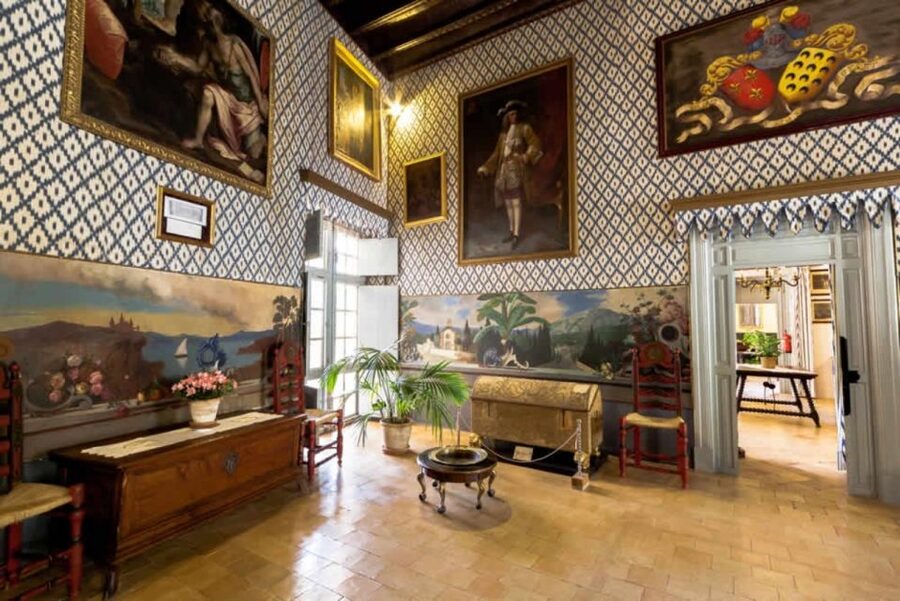
At $11, Alfabia offers solid value for a self-guided cultural stop. You get access to a house with more than five centuries of development behind it, plus gardens with fountains, plane trees, hydrangeas, and Arab and English influences.
The value depends on what you want from the visit. If you enjoy looking closely at buildings and gardens, you can easily make the ticket worthwhile. If you expect a major flower spectacle, flawless grounds, or a guided explanation in every room, the experience may feel less convincing.
I would book it for a relaxed half-day or as part of a Sóller area outing. The one-day validity gives you flexibility, and free cancellation up to 24 hours before the visit reduces the risk if your plans change. Reserve and pay later is also available.
My advice is simple: book Alfabia if you value atmosphere, architecture, and garden design more than polished presentation. Skip it if your schedule is very tight or you only want gardens at their most colorful.
FAQ
Where is the Alfabia complex located?
Alfabia is in Spain, in the Tramontana mountain range near Sóller, within the Serra de Tramuntana UNESCO World Heritage Site.
How much does admission cost?
The listed price is $11 per person.
How long is the ticket valid?
The ticket is valid for one day.
What does the ticket include?
The ticket includes entrance fees to the Alfabia complex.
Is the visit guided?
The provided information does not name a guide or include a guided tour. You should expect to explore the house and gardens independently.
How can I reach Alfabia from Palma?
You can use public transportation from Palma on Line 211. Check the TIB website for departure times.
Can I use the Sóller Train to reach the area?
Yes. The Sóller Train is listed as a transport option. Check its current timetable before your visit.
What is the latest time I can enter?
The last entrance is 60 minutes before the complex closes.
Can I cancel my booking?
Yes. You can cancel up to 24 hours in advance for a full refund. Reserve now and pay later is also available.
Just added around Mallorca
- Discover the major cultural attractions of Palma De Mallorca on a Private Tour★ 4.5 · 3 reviews
- Wine Tasting – wines from the smallest wineries 3 wines★ 5.0 · 3 reviews
- Extreme e-scooter off-road excursions★ 5.0 · 3 reviews
- Full-day Tour to Drach Caves and Portocristo Town★ 4.0 · 3 reviews
- Gaudí and Modernist Art: Guided Tour in Palma de Mallorca★ 4.5 · 3 reviews
- Mallorca Beyond the Guidebooks – Tour with the famous Author★ 5.0 · 3 reviews
- Peguera: The lovely Magical Creatures of Peguera,family walk★ 3.1 · 3 reviews
- Mallorca: Speleo-Coasteering Tour along the Coast of Alcudia★ 5.0 · 3 reviews
Soller Tours, compared.


Alcudia/Marratxi: Valldemossa & Soller Tour by Tram & Bus
Read our review →
Mallorca Full-Day VIP Tour: Valldemossa, Deià & Sóller Experience
Read our review →
Tramuntana Full-Day Tour with Sóller Train and Lunch
Read our review →
Valldemosa and Valley of Soller Tour in Mallorca
Read our review →
Browse the lists this tour appears in