
Reviewed · WALKING TOURS
2-Hour Private Walking Tour Through Palma’s Jewish Quarter
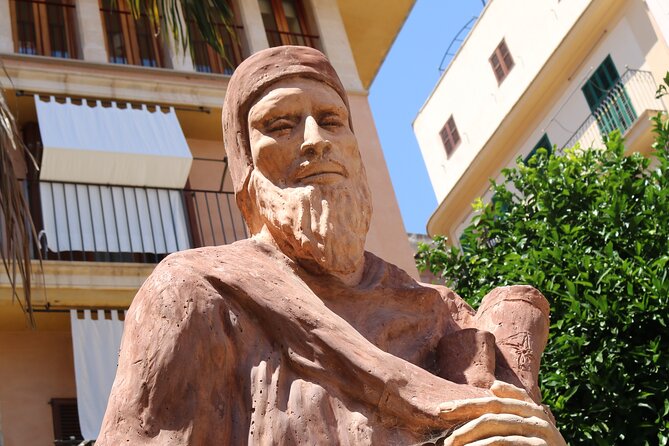
Palma’s old quarter keeps much of its Jewish past out of plain sight. On this private two-hour walk, your guide helps you read street names, walls, old buildings, and modern art as clues to a community that once shaped the city. You’ll see the statue of cartographer Jafuda ben Cresques, the former site of a synagogue, and Montesion Church, built where Palma’s main synagogue once stood.
I like two things right away. First, the tour focuses on details you could easily miss on your own, including Leather Maker Street, Can Miquel bakery, and a mural tied to a dramatic medieval story. Second, the private format lets your guide adjust the pace, which is useful for families, older walkers, and anyone who wants time for questions. The main consideration is price: at $120.68 per person, it is a serious investment for two hours, especially for a small group.
In This Review
- Key points to know before booking
- Palma’s Jewish past is written between the lines
- Meeting Jafuda ben Cresques, Palma’s mapmaker
- Leather Maker Street and the Can Miquel bakery site
- Reading clues in old walls and street names
- The Tower of Love mural and a medieval conflict
- Montesion Church and the former main synagogue
- What the private format changes
- Guides, pace, and the human side of the walk
- How long to allow and what to bring
- Who will get the most from this Palma walk?
- Should you book the Jewish Quarter walking tour?
- FAQ
- How long does the Jewish Quarter tour last?
- Where does the tour begin?
- Where does the tour end?
- Is this a private tour?
- What language is the tour offered in?
- What is included in the price?
- Are food and drinks included?
- What happens if the weather is poor?
Key points to know before booking
- Jafuda ben Cresques: Learn about the 14th-century Jewish cartographer behind the famous Catalan Atlas, a map Christopher Columbus might have used.
- Synagogue sites: Visit the places linked to Palma’s former Jewish houses of worship, including the site now occupied by Montesion Church.
- Clues in the streets: Look for Jewish references in old walls, street names, and the former Can Miquel bakery site.
- Private guiding: Only your party takes part, so the route and pace can be adjusted.
- Personal guide styles: Guides named in the experience include Shaun, Peter, Shaul, Cristina, and Didi, also known as Denisse.
- Straightforward walking: The route involves city walking, but one account describes no difficult terrain or stairs, and a guide helped a handicapped participant choose an easier path.
Palma’s Jewish past is written between the lines
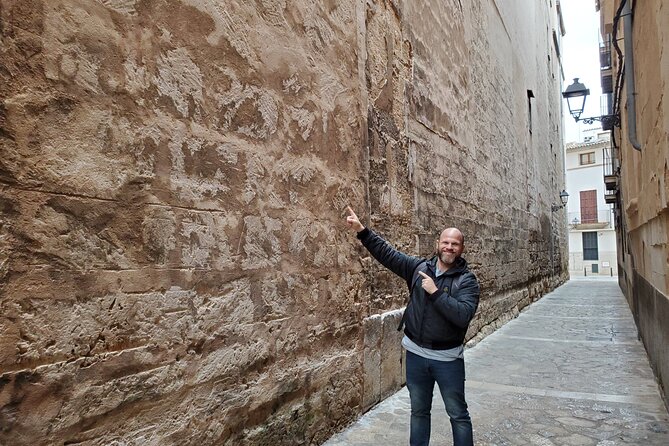
This is not a tour built around grand interiors or a preserved synagogue. Much of what you come to see has changed use, disappeared, or survives only through names and fragments. That is exactly why a guide matters.
You begin at Starbucks on Plaça de Cort, 1, in central Palma. From there, the walk leads into the old city, where the past is easy to overlook if you are simply heading toward the cathedral or shopping streets. Your guide points out signs and clues that connect present-day Palma with its Jewish past.
The experience also deals with the Jewish, Converso, and Chueta story of Mallorca. That makes the walk broader than a list of former buildings. You hear about people who lived openly as Jews, those forced to convert, and the later identity connected with Chueta history. The subject includes faith, pressure, conflict, survival, and memory.
I would not book this expecting a light sightseeing stroll with a few historical facts added on. The subject can be sobering. The tour’s value comes from giving you a more complete picture of Palma, including parts of its past that are not obvious from the city’s polished historic center.
More things to do in Palma:
- Palma: Cathedral of Mallorca Skip-the-Line Entry Ticket
★ 4.6 · 14,386 reviews - Palma de Mallorca: 5-Hour Catamaran Cruise with Lunch & Swim
★ 4.5 · 9,957 reviews - Palma de Mallorca: City Sightseeing Hop-On Hop-Off Bus Tour
★ 4.1 · 4,450 reviews
Meeting Jafuda ben Cresques, Palma’s mapmaker
One of the first notable figures on the route is Jafuda ben Cresques, a Jewish cartographer from the 14th century. His connection to the Catalan Atlas gives the tour an appealing link between Palma and the wider world of medieval mapmaking.
The atlas became famous, and your guide explains the possibility that Christopher Columbus may have used it on his voyages. The wording matters: this is presented as a possibility, not a certainty. That small point is a good example of how the tour can connect a local figure to major world events without pretending every detail is proven beyond doubt.
The statue also gives the experience a human focus. Instead of treating Palma’s Jewish past as an abstract subject, you meet one person who worked, created, and left a mark on the wider story of exploration. If you enjoy history through individual lives, this is likely to be one of the strongest moments early in the walk.
Leather Maker Street and the Can Miquel bakery site
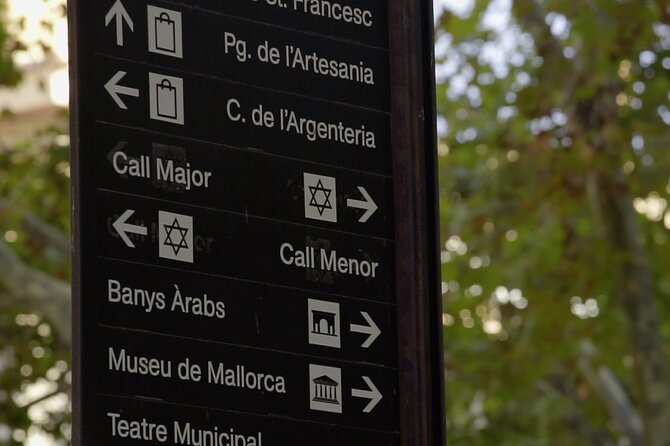
The walk continues down Leather Maker Street, a name that helps set the scene for old Palma’s working streets. Here you learn about Can Miquel, a bakery that was still in use until recently and was built on the site of the sinagoga nova, or new synagogue.
This stop makes the tour’s method clear. You are not simply looking for a building labeled Jewish synagogue. You are learning how a place can keep its connection to the past even after its original purpose has vanished.
Can Miquel is also a useful reminder that history often survives in ordinary places. A bakery is easier to pass without a second thought than a museum display. With a guide beside you, it becomes a point of entry into the story of Palma’s former Jewish community.
The tour does not provide a separate admission ticket for this stop, and there are no entry fees included because the walk is based on seeing sites from the streets. That keeps the route simple, but it also means you should expect interpretation rather than access to preserved synagogue interiors.
Reading clues in old walls and street names
A central part of the walk is the search for signs hidden in Palma’s streets. Your guide points out references in walls and street names that suggest the importance of the Jewish community in earlier centuries.
This style of touring rewards attention. You may already have walked through parts of the old city without realizing what a name or building line was telling you. The guide’s job is not only to provide dates. It is to show you how memory can remain in the layout and language of a neighborhood.
I especially like this approach for a first visit to Palma because it changes the way you see the city afterward. Once you learn to look for clues, you can continue noticing details during your own walks. It gives you a useful lens for exploring beyond the two-hour route.
The private setup helps here. You can stop to ask about a street, request a slower explanation, or spend more time on a detail that catches your interest. In a larger group, these moments often get cut short. With only your party present, the guide can respond to your pace.
More walks around Mallorca:
- Palma de Mallorca: City Walking Tour with The Cathedral
★ 4.0 · 657 reviews - Palma de Mallorca: Foodie Walking Tour of the Old Town
★ 4.6 · 372 reviews - Palma, Cathedral & Valldemossa: Guided walking Tour
★ 4.1 · 182 reviews - Private walking tour in Palma de Mallorca with local guides.
★ 5.0 · 182 reviews
The Tower of Love mural and a medieval conflict
The route includes a modern mural painted during the pandemic. It presents a well-documented story of lust and conflict involving two Jews in the Tower of Love during the 1300s.
This is one of the more unusual stops. The mural gives a recent visual form to a medieval episode, so the experience moves between old streets and newer public art. It also shows that Jewish history in Palma is not treated only as a formal subject for scholars. It can appear through storytelling, art, and local memory.
The story itself is not a tidy one. Expect human behavior, tension, and conflict rather than a polished account of noble figures. That can make the stop memorable, but it may not suit anyone looking only for religious landmarks or architectural highlights.
Your guide helps place the story in its setting and explains why the mural matters. Since the experience includes anecdotes as well as historical information, the walk feels personal and grounded in the city’s streets. Guides Shaul and Cristina, among others, are described as engaging and able to combine stories with broader historical context.
Montesion Church and the former main synagogue
Another key stop is the site of Palma’s main synagogue, where Montesion Church now stands. The change in function is important. You are looking at a present-day Christian church while learning about the Jewish building and community that came before it.
This stop asks you to hold two parts of Palma’s story at once. The church is a visible building you can identify today. The synagogue is an earlier layer, explained by your guide rather than preserved as a complete site. That contrast is central to the experience.
The route then continues down the Street of the Wind, where you may find something surprising. The supplied details do not spell out exactly what that surprise is, so I would treat it as a moment to discover in person rather than something to expect by name.
That restraint is useful when judging the tour. The walk is not selling a fixed set of spectacular monuments. Its appeal is the way several modest clues fit together. If you want large rooms, formal exhibits, or a clear trail of surviving artifacts, this may feel limited. If you enjoy reading a city through small details, it offers more.
What the private format changes
The price is $120.68 per person, with group discounts available. That amount includes all fees and taxes, but not lunch, coffee or tea, alcoholic drinks, or bottled water. Since the tour lasts about two hours and has no paid admission stops, most of the cost goes toward the private guide and the tailored experience.
For a solo visitor, the price may be hard to justify. For a family or group that can share the private booking, the calculation improves, especially if you value a relaxed pace and the chance to ask plenty of questions. The group discount may also help, though the exact reduced price is not specified.
Private does not automatically mean better, but it matters on a subject like this. The history can raise questions about identity, forced conversion, and the survival of traditions. You do not have to hold those questions until the end. You can ask as they come up.
The private format also helps with mobility. One participant described being handicapped and receiving help from Peter, who found the easiest path. Another account described the walk as involving some walking but no difficult terrain or stairs. The official information says most people can participate and service animals are allowed. Still, you should tell the provider about your needs in advance, since old-city streets can vary and the exact route may be adjusted.
Guides, pace, and the human side of the walk
The experience has been led by guides including Shaun, Peter, Shaul, Cristina, and Didi, also known as Denisse. Their individual approaches may differ, but the information supplied points to a shared focus on clear explanations, enthusiasm, anecdotes, and visual material.
Shaun is described as well spoken and deeply invested in the subject. Shaul is noted for answering questions and using visuals to support the walk. Cristina is associated with a well-paced presentation of the Jewish, Converso, and Chueta story. Peter is singled out for adapting the route to make it easier for a person with limited mobility.
Those details matter because a history walk depends heavily on the guide. Many of the sites are former locations rather than intact monuments. A guide who can explain, point, compare, and tell a story will make the difference between a meaningful stop and an empty address.
The walk is offered in English. It ends back at the starting point, which makes it easy to fit into a morning or afternoon in central Palma. It is also near public transportation, though the supplied information does not give a travel time from the airport, cruise port, or any specific hotel.
How long to allow and what to bring
The scheduled walk lasts about two hours. That is enough time for a focused introduction to Palma’s Jewish past, but not enough to cover every related site or explore the city at a museum pace.
Wear comfortable shoes and expect steady city walking. The route is not described as difficult, and there are no stairs mentioned in one account, but the experience still takes place on historic streets. Bring water, since bottled water is not included, and plan any coffee or meal separately.
The tour requires good weather. If poor weather causes cancellation, you are offered another date or a full refund. For other cancellations, you can receive a full refund if you cancel at least 24 hours before the start time. Changes or cancellations made within 24 hours are not accepted for a refund.
The tour is often reserved well ahead, with an average booking lead time of 44 days. That does not guarantee that every date fills early, but it is a useful warning if your Mallorca schedule is fixed.
Who will get the most from this Palma walk?
I would recommend it most strongly to you if you enjoy local history, religious history, genealogy, or the way ordinary city streets preserve old stories. It is also a good choice if you have already seen Palma’s main sights and want a more focused subject for a second look at the center.
Jewish visitors and people researching Sephardic, Converso, or Chueta connections may find the subject especially meaningful. The walk also suits cruise-port visitors who want an organized two-hour outing that begins and ends in central Palma.
Families can benefit from the private format because the guide can adjust the pace and explain difficult subjects in a way that fits the group. The same is true for older walkers or anyone who needs an easier route.
I would hesitate to recommend it if you want a tour built around entering historic religious buildings. The former synagogue sites are part of the streetscape, and the experience depends on explanation. You should also think carefully about the cost if you are traveling alone.
Should you book the Jewish Quarter walking tour?
Book it if you want to see Palma through a less obvious part of its past, and if you value a private guide who can connect names, street corners, former buildings, art, and personal stories. The statue of Jafuda ben Cresques, the Can Miquel bakery site, Montesion Church, the Tower of Love mural, and the Street of the Wind give the route a distinct shape.
The strongest reason to choose it is the access to meaning rather than admission. You will not simply collect landmarks. You will learn why an ordinary street or building matters, and you will leave with a better sense of the Jewish, Converso, and Chueta experience in Mallorca.
At $120.68 per person, I would book it for a couple, family, or small group that can share the value of a private guide. Solo visitors should compare the price with their interest in the subject. If that history matters to you, this focused walk offers a thoughtful and personal way to meet Palma.
FAQ
How long does the Jewish Quarter tour last?
The walking tour lasts approximately two hours.
Where does the tour begin?
It begins at Starbucks, Plaça de Cort, 1, Distrito Centro, 07001 Palma, Illes Balears, Spain.
Where does the tour end?
The activity ends back at the meeting point.
Is this a private tour?
Yes. Only your group participates in the activity.
What language is the tour offered in?
The tour is offered in English.
What is included in the price?
All fees and taxes are included.
Are food and drinks included?
No. Lunch, coffee or tea, alcoholic drinks, and bottled water are not included.
What happens if the weather is poor?
The experience requires good weather. If it is canceled because of poor weather, you will be offered a different date or a full refund.
More 2-Hour Experiences in Mallorca
- Mallorca: 2-Hour Dolphin Watching Cruise & Glass-Bottom Boat
★ 4.5 · 1,395 reviews - Mallorca: 2-Hour Coastline & Malgrat Islands Catamaran Tour
★ 4.3 · 966 reviews - 2 Hour Deluxe Segway Tour of Palma
★ 5.0 · 287 reviews - Mallorca: 2-Hour Sightseeing Segway Tour with Local Guide
★ 4.9 · 194 reviews
Just added around Mallorca
- Discover the major cultural attractions of Palma De Mallorca on a Private Tour★ 4.5 · 3 reviews
- Wine Tasting – wines from the smallest wineries 3 wines★ 5.0 · 3 reviews
- Extreme e-scooter off-road excursions★ 5.0 · 3 reviews
- Full-day Tour to Drach Caves and Portocristo Town★ 4.0 · 3 reviews
- Gaudí and Modernist Art: Guided Tour in Palma de Mallorca★ 4.5 · 3 reviews
- Mallorca Beyond the Guidebooks – Tour with the famous Author★ 5.0 · 3 reviews
- Peguera: The lovely Magical Creatures of Peguera,family walk★ 3.1 · 3 reviews
- Mallorca: Speleo-Coasteering Tour along the Coast of Alcudia★ 5.0 · 3 reviews
Walking Tours, compared.

Palma, Cathedral & Valldemossa: Guided walking Tour
Read our review →
Private walking tour in Palma de Mallorca with local guides.
Read our review →
Food Tasting Walking Tour in Palma with a Local
Read our review →
Browse the lists this tour appears in