
Reviewed · MALLORCA COASTEERING & CLIFF JUMPING
Coasteering in South Mallorca with Transfers
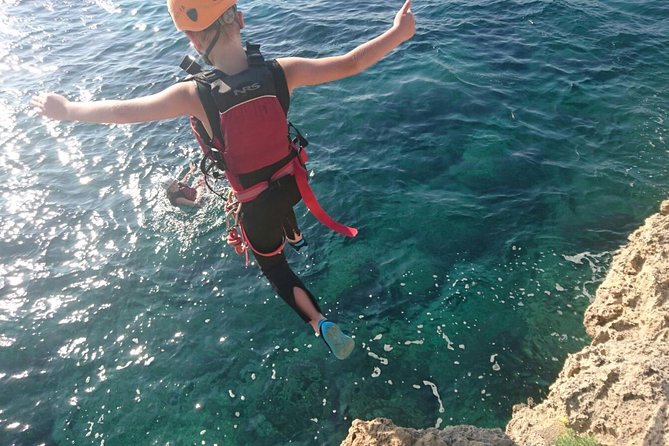
The thrill here is simple: you move along Mallorca’s rocky coast by swimming, scrambling, rappelling, climbing, and jumping into clear sea water. I like the progressive cliff jumps, which let you start low and work toward higher ledges, and I like the guides’ patient approach, especially names such as José, Naco, Joni, Mario, and Niko. One point to weigh is that the activity can be physically rough, and the exact route may focus on one cove rather than a long trek along the coast.
I also like that hotel pickup, equipment, insurance, and a small group of up to 10 are included. You get wetsuit gear, helmet, buoyancy aid, and shoes, then spend the active part of the day with a qualified local guide rather than figuring out sea cliffs alone. The main drawback is practical: meeting arrangements can feel unclear, and you may change behind the van with no restroom or proper changing room at the pickup point.
In This Review
- Key points to know before you book
- From your hotel to Mallorca’s rocky coast
- Caló d’en Monjo and the short approach
- The jump sequence: start low, then choose your height
- Scrambling, psicobloc, and the rappel sections
- The improvised zip line finale
- Equipment, safety, and the real level of exertion
- What to bring, and what to leave in the van
- Is $90.51 a fair price?
- Who should book this Mallorca adventure?
- FAQ
- How long does the coasteering experience last?
- What is the highest cliff jump?
- Is hotel pickup included?
- What equipment is provided?
- What should I bring?
- Can children join the tour?
- Should you book it?
Key points to know before you book
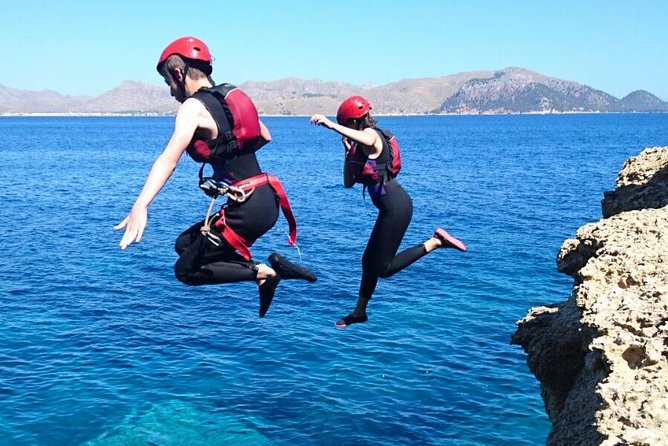
- Jumps build from about 2 meters to as high as 12 meters, with smaller options for anyone who wants to stay cautious.
- The course mixes swimming, scrambling, rappel work, rock climbing, sea caves, and a zip line into the water.
- Guides set the pace, encourage nervous beginners, and allow you to skip any jump or climbing section.
- Pickup covers much of southern Mallorca, but guests in Alcudia, Cala d’Or, and Cala Ratjada need to select the correct operating zone.
- The terrain is demanding, with sharp rock, repeated climbs out of the water, and rougher sea conditions on some days.
- Bring a swimsuit, sunscreen, water, lunch, and a towel, but keep valuables and cameras protected around salt water and rock.
From your hotel to Mallorca’s rocky coast
The day begins with pickup from much of southern Mallorca, from Puig de Ros along the coast toward Andratx. You can also meet at the listed point on Carrer de Cala Fornells in Cala Fornells. The scheduled start is 10 a.m., with morning or afternoon departures available depending on the booking.
Transport is by minivan, and that matters more than it may seem. The activity area is away from the main southern pickup zone, so you do not need to rent a car or puzzle out a remote coastal road. The ride also gives you a place to leave your dry clothes, lunch, and larger items while you work along the shore.
Check the pickup zone carefully. The operator also runs northern coasteering for the Alcudia area and eastern routes for Cala d’Or and Cala Ratjada. Choose the wrong zone and your arrangements may not match the route you need.
The meeting point is a pickup location, not necessarily a staffed office. That means you may not find a sign, reception desk, changing area, or restroom when you arrive. Keep your phone available, allow extra time, and confirm the exact pickup details before the day of the activity.
At the van, you receive the equipment and provide the details requested at booking: height, weight, and shoe size. This is not needless paperwork. Properly sized equipment makes the swimming and climbing easier, and the guide needs those details to prepare gear in advance.
More coasteering and cliff jumping days:
- Mallorca: Quad Bike Tour, Snorkeling, and Cliff Jumping
★ 4.8 · 2,294 reviews - Mallorca: Kayaking, Sea Cave, Cliff Jumping & Snorkel Tour
★ 4.8 · 1,447 reviews - Mallorca: Kayaking, Sea Cave, Cliff Jumping & Snorkel Tour
★ 5.0 · 769 reviews
Caló d’en Monjo and the short approach
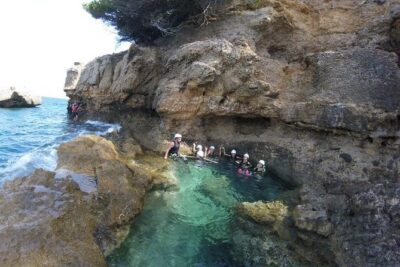
The coast used for many departures is around Caló d’en Monjo, a beautiful cove and rocky section of Mallorca’s shore. You first make a short walk, sometimes about 10 minutes, to reach the jumping and climbing area. This approach is not a long hike, but the ground is uneven and can feel awkward in wet gear.
You normally leave bags in a designated spot and return to them as the course moves between sections. That gives you a chance to carry a waterproof phone or camera, but the sea, rock, and repeated splashing still make photography a risk. A waterproof phone case is a smart addition if you want pictures. A camera supplied by the operator is not listed as part of the tour.
Once at the coast, the guide gives a safety briefing. You learn how to enter the water, where to place your feet, how to approach a jump, and how to move around the rock. Pay close attention here. Coasteering feels playful, but wet limestone, waves, and height demand careful instructions.
The scenery is a major part of the value. You are not jumping into a plain swimming pool. You move through sea caves, rock shelves, pools, and cliff-lined water, with Mallorca’s coastline around you. The cove setting also gives you a change of pace between adrenaline-heavy sections.
The jump sequence: start low, then choose your height
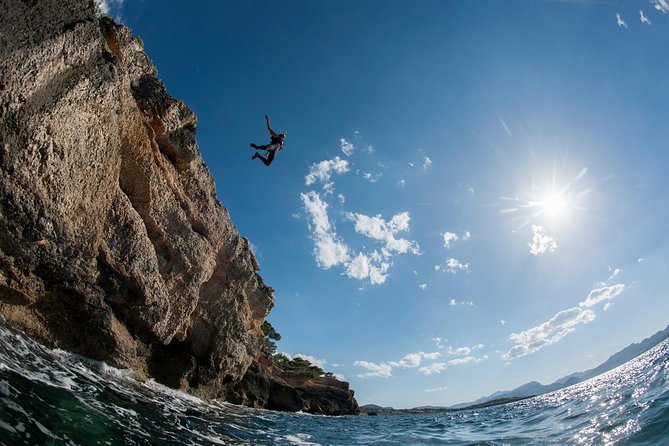
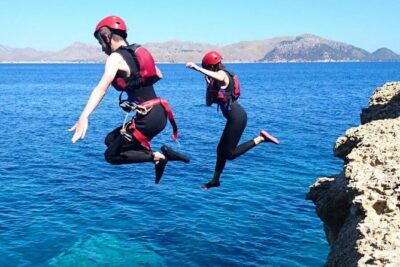
The cliff jumps are the clearest feature of the course. Heights begin at roughly 2 meters, or about 6 feet, and can rise to 12 meters, or about 39 feet. Some accounts describe final jumps closer to 9 meters, so the exact top height depends on the route, conditions, and what the guide can safely use that day.
The progression is well suited to first-timers. You begin with a low jump, learn the body position, and decide how the next one feels. The guide can then offer a higher ledge, while you remain free to repeat a lower jump, swim around it, or skip it altogether.
That choice is important. The activity is marketed as an adventure, not a test of courage. You do not need to take the biggest jump to get your money’s worth. The best guides, including José and Naco in particular, are described as patient and encouraging, with a habit of easing people toward new heights instead of pushing them past their comfort level.
The sea can make the jumps more intimidating than the number suggests. A 9-meter ledge may look manageable from the ground, then feel much higher when you stand at the edge with the water below. If the sea is rougher than expected, the guide may adjust the plan, and you should expect the experience to feel more physical than a calm-weather photograph suggests.
You may see stronger participants add backflips or tricks, but that is optional. A clean, controlled jump is the goal. Follow the guide’s instructions and do not copy another person’s stunt simply because it looks easy.
Scrambling, psicobloc, and the rappel sections
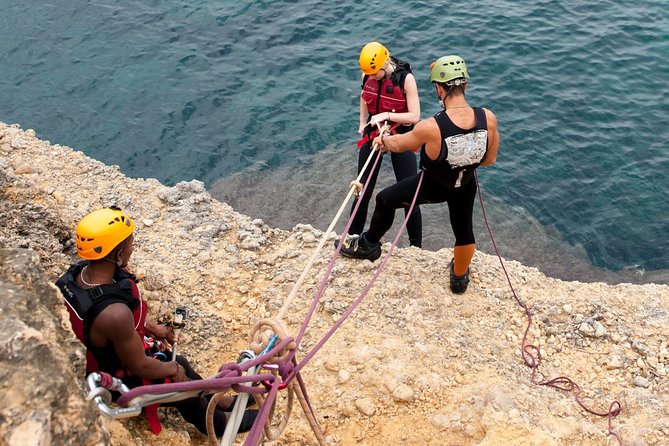
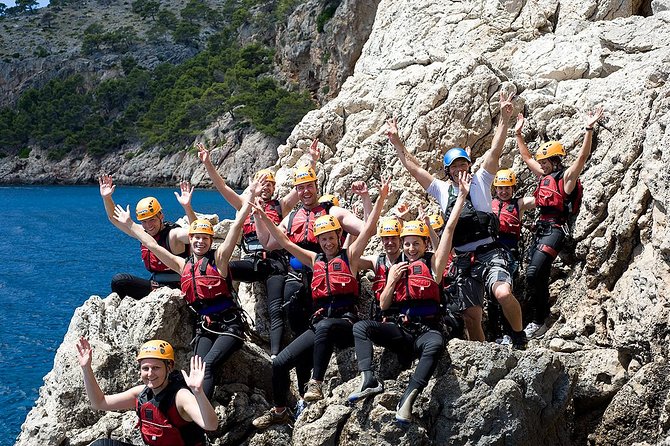
Between jumps, the course uses the rock itself. You scramble and climb along the cliff edge, often just above sea level, to reach another launch point. This section can be the hardest part for your arms and hands. Expect repeated efforts to pull yourself out of the water and move across rough rock.
The climbing is generally more like scrambling and bouldering than a formal roped climb. One account describes moving horizontally along the cliff without a belay, with a fall ending in the sea. That can be manageable for active beginners, but it still calls for strength, balance, and comfort with wet rock.
This is where the tour can surprise you. People often focus on the jumps, yet the climbing may take more effort. Your hands can feel beaten up the next day from gripping and hauling yourself out of the water. Gloves are not listed as supplied, so do not assume you will have hand protection.
The guides may also introduce psicobloc, sometimes called deep-water free soloing. Here you climb a short section above the sea without ropes, with a clean drop into the water below. The height and route vary, and you can decline this part if it does not suit you.
Rappelling adds another useful skill. You lower yourself from a sea cliff with a climbing rope and rappel device, rather than simply jumping from every point. It gives you a different kind of challenge and lets you reach pools, cave areas, and lower rock shelves in a controlled way.
The course is not necessarily a continuous expedition along miles of coast. At times, the group may remain around one cove and move from cliff to cliff within that area. That makes the day more focused and practical, but it may disappoint you if you expect a long coastal traverse with constant forward progress.
Same island, a completely different kind of day:
- Palma: Cathedral of Mallorca Skip-the-Line Entry Ticket
★ 4.6 · 14,386 reviews - Palma de Mallorca: 5-Hour Catamaran Cruise with Lunch & Swim
★ 4.5 · 9,957 reviews - Porto Cristo: Caves of Hams Entry Ticket
★ 4.2 · 6,548 reviews - Palma de Mallorca: City Sightseeing Hop-On Hop-Off Bus Tour
★ 4.1 · 4,450 reviews
The improvised zip line finale
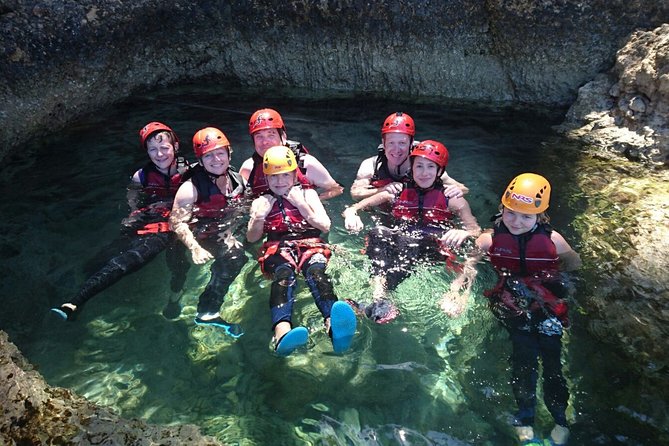
A short zip line often provides the most memorable finish. Guides have constructed a line between rock points, sending you across and into the water. It is not a large theme-park ride. It is a compact, location-based feature built around the cliffs and sea conditions available that day.
Getting to the zip line may require a swim and a climb out of the water. That approach can be harder than the ride itself, particularly for children or anyone who tires quickly. Your guide should help the group find a safe route, but you still need enough energy for the final section.
The zip line does not appear on every description with the same level of detail, so treat it as part of the possible course rather than a guarantee of a fixed installation. Guides may adapt the route and equipment to the group and the coast. That flexibility is useful for safety, though it means the exact sequence can change.
Equipment, safety, and the real level of exertion
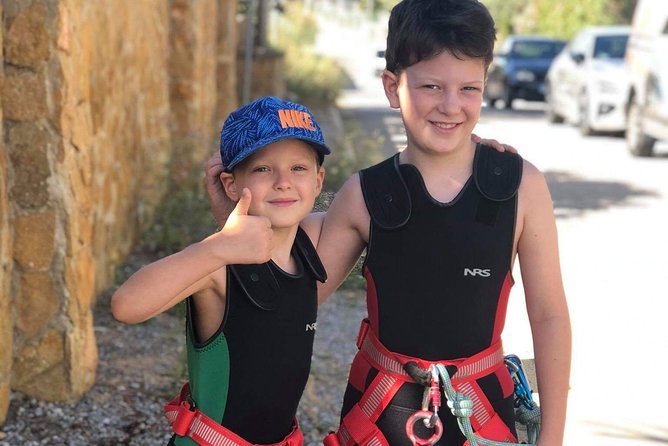
The price includes a wetsuit, helmet, buoyancy aid, shoes, other required equipment, insurance, transport, and a qualified local guide. The wetsuit helps protect your skin from sharp rock as well as offering coverage in the water. The buoyancy aid is especially useful during swims and gives the guide another safety tool if someone gets into trouble.
Equipment condition deserves a careful look. One dissatisfied participant reported torn wetsuits and questioned the grip of plastic-soled shoes. The operator replied that guests may choose to wear their own suitable shoes and that the equipment is used regularly. The practical lesson is to inspect what you receive and ask about alternatives before entering the water.
Comfortable clothes and hiking shoes are recommended for the approach, but the operator supplies water shoes for the activity itself. Do not rely on flip-flops for the rocky walk or climbing. If you own sturdy water shoes with good grip, ask whether they are appropriate before accepting the supplied pair.
The minimum age is 8, and most people can take part, but this is not a passive boat trip. You need to swim, climb over uneven rock, and handle repeated entries and exits from the sea. Children who are confident in water and active on rough ground may have a great time. A child who dislikes heights, cold water, or scrambling may be happier watching from shore.
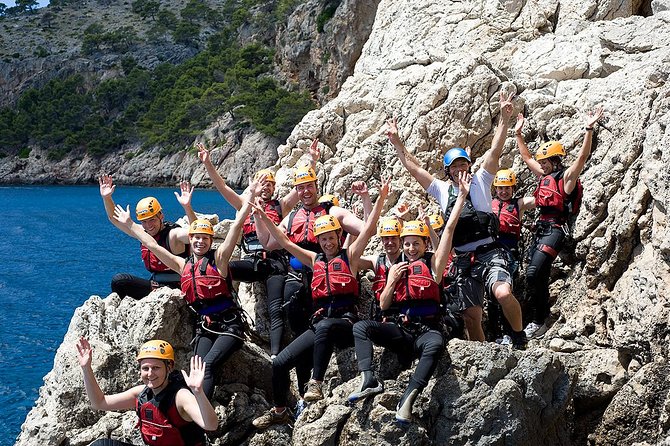
The maximum group size is 10. That is small enough for a guide to watch individual choices and give direct help, while still allowing a group atmosphere. Larger private groups can be tailored, though the supplied information does not specify the extra cost or exact format.
Guides speak Spanish and English at minimum. French is not guaranteed, so you should be comfortable receiving safety instructions in English or Spanish. The guide names associated with departures include José, Gemma, Naco, Joni, Mario, Niko, Rafael, and Alfonso. The strongest pattern is not a single personality but a patient teaching style: low jumps first, clear instructions, and a willingness to let you opt out.
What to bring, and what to leave in the van
Bring your swimsuit and towel. You should also pack sunscreen, bottled water, and your own lunch, since food and drinks are not included.
You may not use the towel or lunch during the active portion, but they are useful afterward and for the ride back. A small snack can make sense, especially after several hours of swimming and climbing.
Use reef-safe sunscreen before you arrive. Once you are in a wetsuit and moving between rocks, reapplying can be awkward. A waterproof phone case is worthwhile if you want photos, but do not bring loose valuables or anything you cannot afford to get wet.
You can often return to the bags between sections, but that does not make an ordinary phone safe. Salt water and rock are unforgiving. Keep photography secondary to listening, moving carefully, and enjoying the setting.
Is $90.51 a fair price?
At $90.51 per person, this is not a bargain-bin beach activity, but the package includes more than a guided swim. Hotel pickup and drop-off, minivan transport, equipment, insurance, and a qualified guide remove several extra costs and much of the planning burden.
The value is strongest if you are staying in southern Mallorca without a car, or if you want one organized adventure rather than renting equipment and judging sea cliffs yourself. You are paying for access, instruction, safety equipment, and a route that combines several activities in roughly four hours.
The value is weaker if you only want a leisurely swim or a scenic coastal walk. You may spend parts of the day waiting for other participants at jumps, changing behind the van, or dealing with a route that stays around one cove. The activity is best judged as a compact adventure course, not a full-day exploration of Mallorca’s coastline.
The 4.8 rating from 55 ratings and 95 percent recommendation indicate strong overall satisfaction, but the details matter more than the number. The most praised features are the guides, the beautiful cove, the gradual increase in jump height, and the feeling that beginners can participate without taking every challenge.
Who should book this Mallorca adventure?
I would choose this for active families with older children, couples wanting an adrenaline break, solo participants comfortable joining a small group, and anyone curious about climbing without committing to a full technical climbing course.
You will get the most from it if you can swim, tolerate rough ground, and enjoy trying something that makes your stomach flutter. You do not need previous coasteering experience, and you can choose lower jumps or skip sections.
I would think twice if you have a strong fear of heights, limited mobility, trouble climbing out of water, or no comfort with English or Spanish safety instructions. Good weather is required, and the sea may be rough enough to change the plan or postpone the outing.
Free cancellation is available until 24 hours before the start time. If weather or minimum numbers force a cancellation, you are offered another date or a full refund. Last-minute cancellations and changes are not accepted for a refund.
FAQ
How long does the coasteering experience last?
The activity lasts approximately four hours, with the full outing taking about 4 to 4.5 hours depending on transport and the day’s route.
What is the highest cliff jump?
The advertised jumps range from about 2 meters to 12 meters. The exact highest jump can vary with sea conditions, the route, and your comfort level.
Is hotel pickup included?
Yes. Pickup and drop-off are included from areas in southern Mallorca, from Puig de Ros along the coast toward Andratx. Meeting points can be arranged for Airbnb accommodation.
What equipment is provided?
The tour includes a wetsuit, activity shoes, helmet, buoyancy aid, other required equipment, insurance, and transport by minivan.
What should I bring?
Bring a swimsuit, towel, sunscreen, bottled water, and your own lunch. Comfortable clothes and hiking shoes are recommended for the approach. A waterproof phone case is useful if you want to take photos.
Can children join the tour?
The minimum age is 8. The activity is physically active, so children should be comfortable swimming, climbing over uneven rock, and following safety instructions.
Should you book it?
Book this if you want a hands-on coastal adventure with real choices about height and difficulty. The best reason to go is the mix: you might rappel into a pool, scramble above the sea, swim through rock formations, and finish with a zip line, all under the watch of a guide who can adjust the day to your group.
Go in with clear expectations. This is not a gentle sightseeing outing, a guaranteed long-distance coast walk, or a polished facility with changing rooms. It can be rough on your hands, legs, and nerves, but for an active family or adventurous adult, $90.51 buys a memorable and well-supported way to meet Mallorca’s coast at water level.
Just added around Mallorca
- Discover the major cultural attractions of Palma De Mallorca on a Private Tour★ 4.5 · 3 reviews
- Wine Tasting – wines from the smallest wineries 3 wines★ 5.0 · 3 reviews
- Extreme e-scooter off-road excursions★ 5.0 · 3 reviews
- Full-day Tour to Drach Caves and Portocristo Town★ 4.0 · 3 reviews
- Gaudí and Modernist Art: Guided Tour in Palma de Mallorca★ 4.5 · 3 reviews
- Mallorca Beyond the Guidebooks – Tour with the famous Author★ 5.0 · 3 reviews
- Peguera: The lovely Magical Creatures of Peguera,family walk★ 3.1 · 3 reviews
- Mallorca: Speleo-Coasteering Tour along the Coast of Alcudia★ 5.0 · 3 reviews
Mallorca Coasteering & Cliff Jumping, compared.
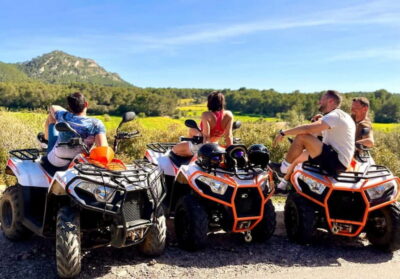
Quad Bike Tour, Snorkeling, and Cliff Jumping
Read our review →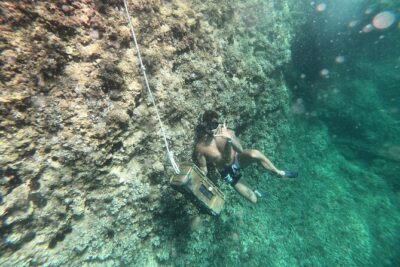
Kayaking, Sea Cave, Cliff Jumping & Snorkel Tour
Read our review →Kayaking, Sea Cave, Cliff Jumping & Snorkel Tour
Read our review →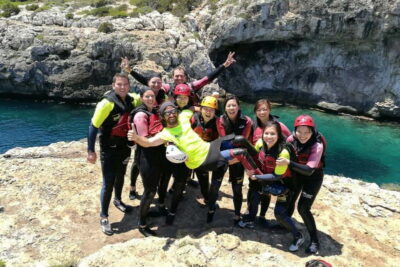
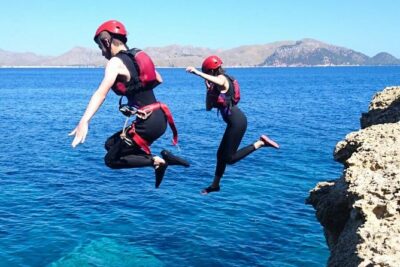
Small-Group Cliff Jumping Experience in Mallorca
Read our review →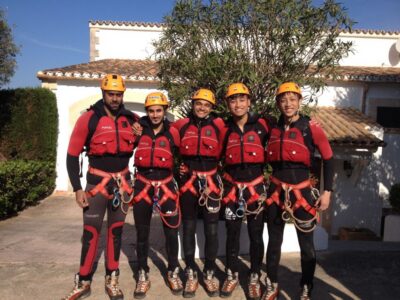
Browse the lists this tour appears in