
Reviewed · MALLORCA COASTEERING & CLIFF JUMPING
Mallorca Half-Day Coasteering Experience
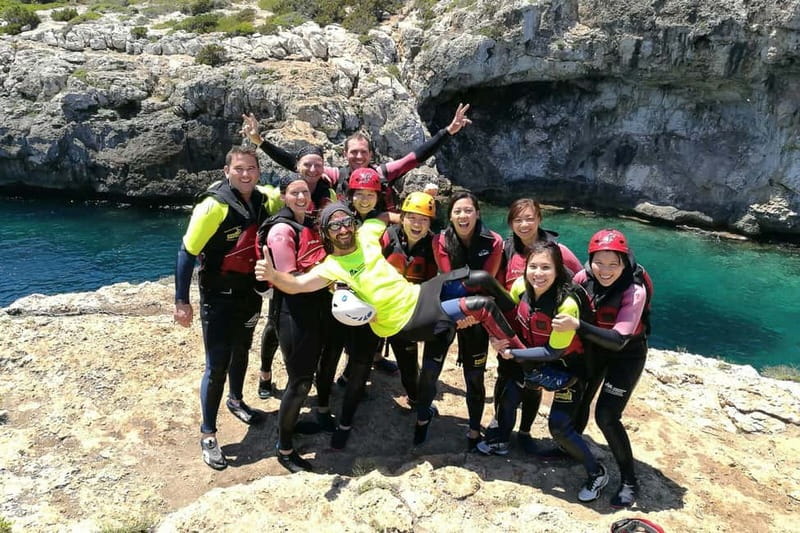
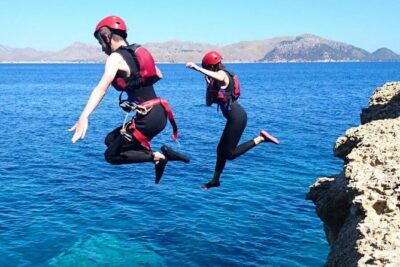
Mallorca’s coast becomes an adventure course on this half-day outing. You swim toward sea caves, scramble over rocks, jump from cliffs between 3 and 12 meters high, and rappel toward the water. Jose, Antonio, Juan, and other multilingual guides lead each section and let you choose how far to push yourself.
I like the mix of activities, since you are not repeating one jump or one climb for four hours. I also like the gentle approach to fear: guides encourage you, explain each move, and let you skip anything that feels wrong. The main caution is that this is a real physical outing, not a casual boat trip. Swimming, wet rock, and open-water exposure can be demanding.
In This Review
- Key points at a glance
- What coasteering in Mallorca actually involves
- The pickup from Arenal to Magaluf
- Safety briefing and choosing your challenge
- Cliff jumping from 3 to 12 meters
- Sea caves and the swim to reach them
- Rock scrambling along Mallorca’s shoreline
- Abseiling down the cliff toward the water
- Guides, group size, and the human side
- What to bring and what to leave behind
- Is $79 good value for four hours?
- Who should book this Mallorca coasteering trip?
- FAQ
- How long does the Mallorca coasteering experience last?
- What activities are included?
- How high are the cliff jumps?
- Is transportation included?
- What languages do the guides speak?
- What is the minimum age?
- What should I bring?
- Should you book it?
Key points at a glance
- Cliff jumps from 3 to 12 meters: Several heights give you a choice, and you do not have to take the highest jump.
- Sea caves reached by swimming: One route included roughly 15 minutes in the water before entering the caves, so swimming ability matters.
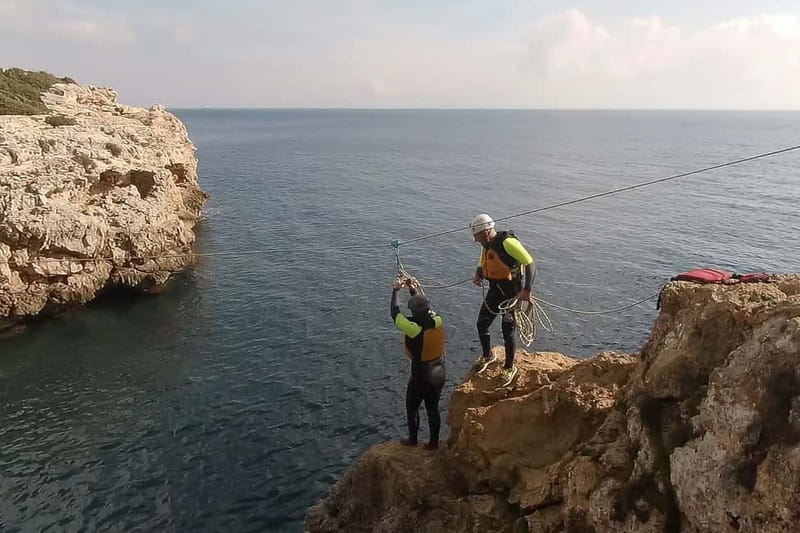
- Abseiling into the sea: Rappel down a cliff with a safety system, then finish near the water.
- Small groups of up to 10: The guide can keep a closer eye on technique, nerves, and changing sea conditions.
- Pickup from South Mallorca: Transfers cover the Arenal to Magaluf zone, usually in mini buses with no more than eight clients.
- A flexible, supportive pace: Guides have helped nervous participants, teenagers, and families take part without forcing anyone.
What coasteering in Mallorca actually involves
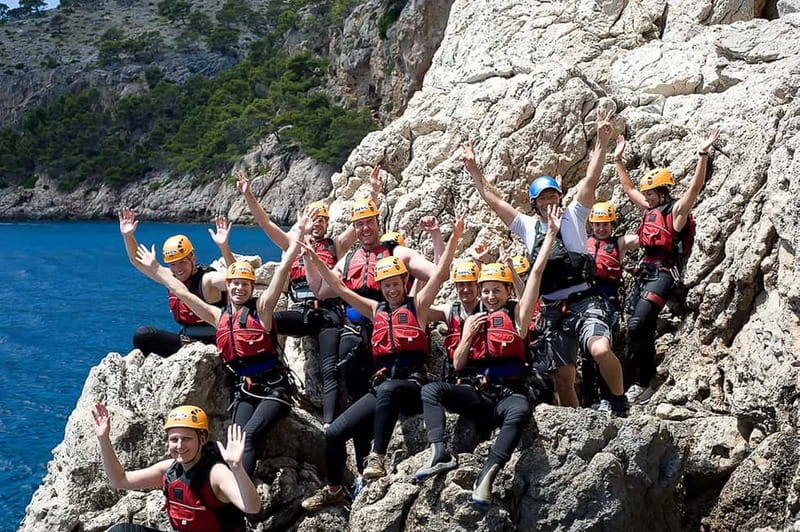
Coasteering is best understood as a moving obstacle course along the shoreline. You do not simply swim beside the coast. You move through it, using the water, rock shelves, cliffs, caves, and natural ledges as part of the route.
The exact order can change. A typical outing combines swimming, rock scrambling, cliff jumping, sea caving, and abseiling. Depending on the bay and the sea, you might also encounter a zip wire into the water, as several outings have included this extra thrill.
This variety is the activity’s biggest strength. If one jump makes your stomach tighten, the next section may be a cave or a short scramble. You get several ways to enjoy the coast, and the guide can adjust the challenge to suit the group.
The setting matters just as much as the action. Mallorca’s clear water and pale rock make the caves and shoreline especially attractive, with sunlight catching the water inside the darker passages. You are seeing parts of the coast that are difficult to reach by road or on foot.
More coasteering and cliff jumping days:
- Mallorca: Quad Bike Tour, Snorkeling, and Cliff Jumping
★ 4.8 · 2,294 reviews - Mallorca: Kayaking, Sea Cave, Cliff Jumping & Snorkel Tour
★ 4.8 · 1,447 reviews - Mallorca: Kayaking, Sea Cave, Cliff Jumping & Snorkel Tour
★ 5.0 · 769 reviews
The pickup from Arenal to Magaluf
Round-trip transport is included from South Mallorca, covering the Arenal to Magaluf zone. Pickups normally take place between 8:30 and 9:00 in the morning or between 14:00 and 14:30 in the afternoon. Transfers usually take no more than 30 minutes.
The mini buses normally carry no more than eight clients, while the activity itself is limited to 10 participants. That is a useful size for a hands-on adventure. You are not lost in a large crowd, and the guide can watch people as they enter the water, climb, and prepare for a jump.
Pay close attention to the pickup point. It has been easy for some participants to walk past it, and a missed meeting point is especially awkward when you cannot reach the operator because you left your phone behind. I would arrive early, check the exact location in advance, and keep your booking details accessible.
Allow some flexibility in your schedule. Departures have occasionally begun 20 to 30 minutes late, and some outings have finished earlier than the advertised four hours. Sea conditions, group pace, and the route can affect the timing, so avoid booking a tight connection afterward.
Safety briefing and choosing your challenge
Once you meet the guide, expect safety equipment and an explanation of how the day works. You will be shown how to move over the rocks, approach a jump, and use the abseiling equipment. The guide remains with the group rather than sending you ahead to figure things out alone.
The strongest part of the experience is the choice built into the route. Cliff jumps range from about 3 to 12 meters in the advertised description, although the actual heights can vary by location. One outing used jumps from roughly 1.5 to 10 meters, while another reached about 30 feet.
That range makes the activity suitable for mixed groups. You can start low, repeat a smaller jump, or stop before the next level. Guides including Jose and Connie have helped nervous participants work through the moment without pushing them past their limits.
You still need to make your own decisions. Encouragement is useful, but no guide can remove the basic risks of jumping into the sea or climbing on wet rock. Listen carefully, follow instructions, and do not let the excitement of the group decide for you.
Cliff jumping from 3 to 12 meters
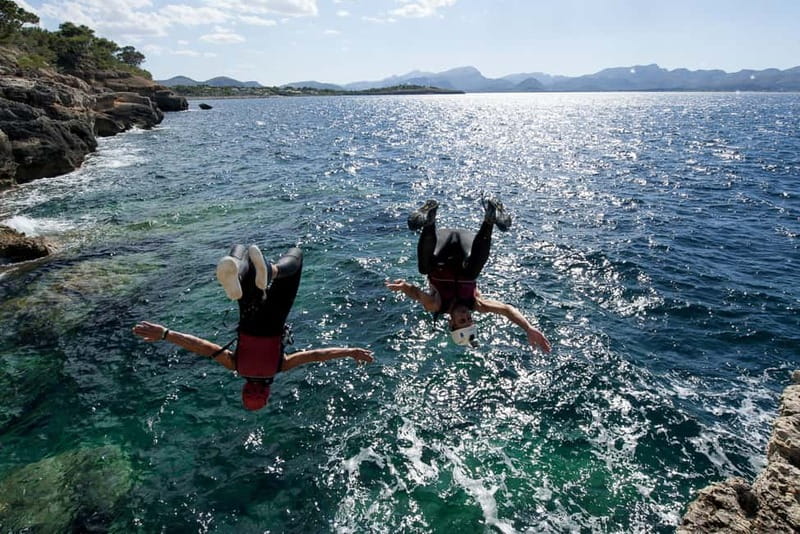
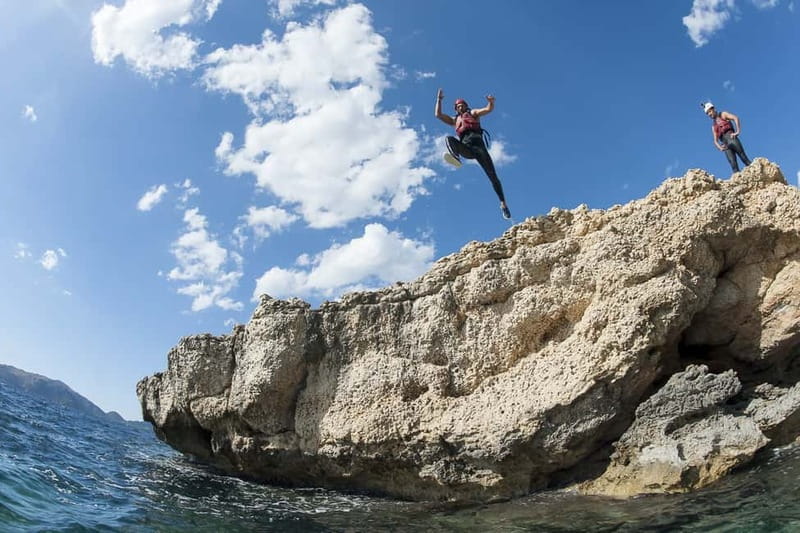
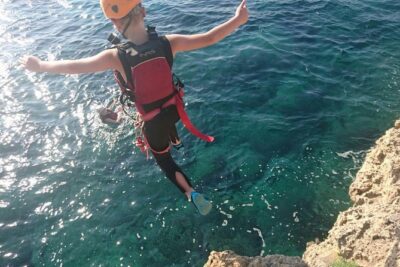
Cliff jumping is likely to be the day’s most visible challenge. You climb to a ledge, listen to the guide’s instructions, check the landing area, and jump into the water below. The height feels different when you are standing at the edge than it does on paper.
The range of platforms is important. Beginners can try a lower jump first, while confident participants can work toward the higher ledges. You may also repeat an easier jump instead of moving up.
This is not a contest. A good guide makes the activity feel controlled rather than reckless, and the guides praised most often for this experience are patient, calm, and encouraging. Jose has helped participants talk through fear before a jump, while Josef has been singled out for putting safety first even when the group reached a higher platform.
Expect to climb back out of the water and move along the rocks before the next jump. That repeated cycle adds to the physical effort. The excitement comes with a practical cost: you will be swimming, climbing, and waiting your turn under the sun.
A few more Mallorca trips worth weighing up
- Caves of Drach Half-Day Tour with Boat Trip and Music Concert
★ 4.0 · 425 reviews - Palma Bay Catamaran Half-Day Cruise
★ 4.0 · 86 reviews - Mallorca: Half-Day Hams’ Caves Tour with Pearl Shop Visit
★ 3.7 · 49 reviews - Palma de Mallorca Half-Day to Caves of Hams, Blue Cave and film
★ 3.5 · 30 reviews
Sea caves and the swim to reach them
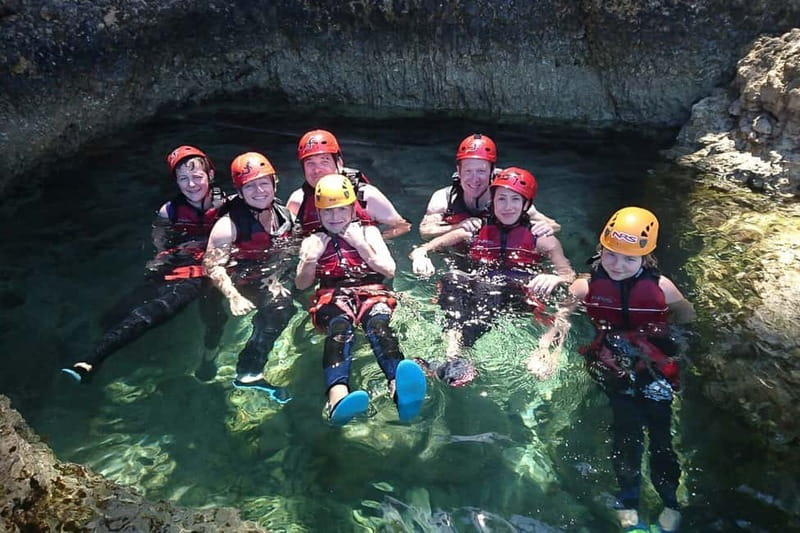
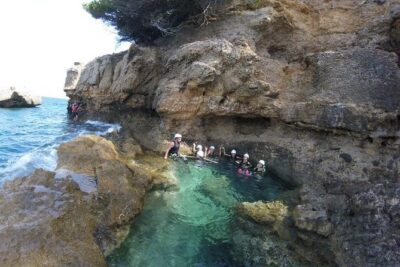
The sea-caving section changes the mood. After the exposed cliffs and jumping, you move into darker rock where the light reflects off the water. The contrast is one of the prettiest parts of the outing.
You need to be comfortable swimming in open water. One route involved about 15 minutes of swimming to reach the caves, and the sea can feel rough when conditions change. You may not have the reassurance of touching the bottom, and the guide may need to help anyone who becomes anxious.
That does not make the activity unsuitable for ordinary swimmers, but it does rule out anyone looking for a short, easy paddle. You should be able to swim with confidence while wearing the required equipment and cope with water movement around the rocks.
Inside the caves, you may scramble over rock and pass through tight or uneven spaces. Anyone with claustrophobia should think carefully before booking. The caves are a major reason to choose coasteering, but they are not a passive sightseeing stop.
Rock scrambling along Mallorca’s shoreline
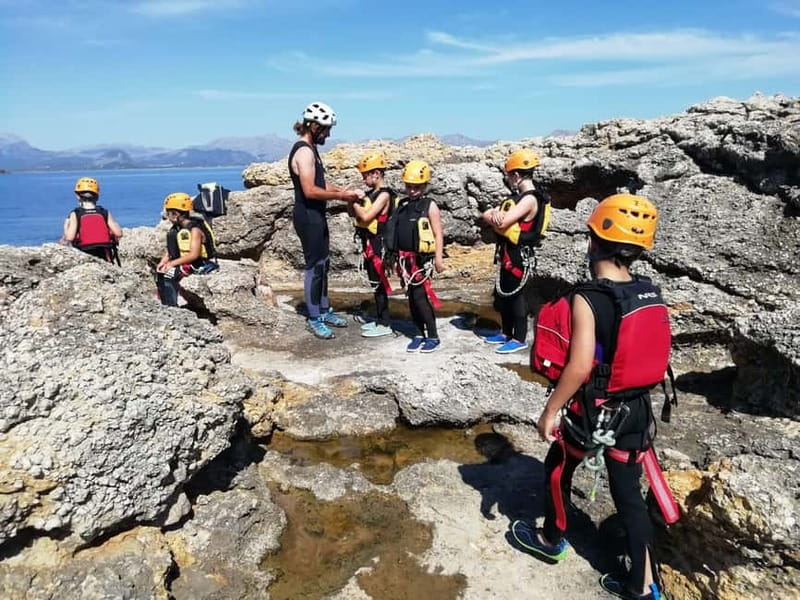
Scrambling fills the gaps between the bigger set pieces. You use your hands and feet to move over ledges, around protruding rocks, and above the water. It is more physical than a normal coastal walk, but the guide sets the route and gives instructions.
Good footwear matters here. Bring sports shoes with full foot coverage that you do not mind getting wet. If you forget suitable shoes, rental shoes are available, but I would rather arrive prepared with a pair that fits securely.
Wet rock can be slippery, and your shoes will not stay dry. Bring a towel and weather-appropriate clothing for the return journey, since the activity finishes after several hours in the water.
The scrambling also gives you time to look around. From a jump platform, you focus on the landing. On the rocks, you can notice the shape of the bay, the clear water, and the changing angle of the cliffs. The route feels more connected to Mallorca than a standard beach activity.
Abseiling down the cliff toward the water
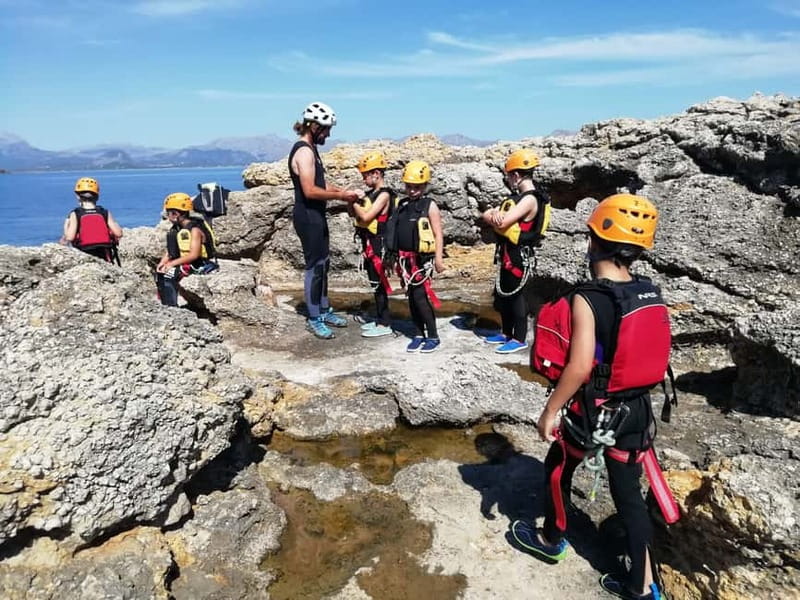
The abseiling section adds a different kind of nerve. Instead of stepping off a ledge into the sea, you lower yourself down the cliff with ropes and safety equipment. The movement is slower, so you have to trust the system and follow the guide’s instructions one step at a time.
Some routes finish with an abseil of about 10 meters into the water. That final position gives you the thrill of descending a cliff without needing to make a free jump. It is a useful option for people who like heights but prefer a controlled descent.
You should expect the guide to handle the technical setup and explain what to do with your feet and body. Your job is to stay attentive and move as instructed. If you are uneasy with heights, this may be the most demanding part of the day.
The combination of jumping and abseiling is valuable because the sensations are different. Cliff jumping is quick and explosive. Abseiling is measured and deliberate. Together, they make the outing feel varied rather than like one long test of courage.
Guides, group size, and the human side
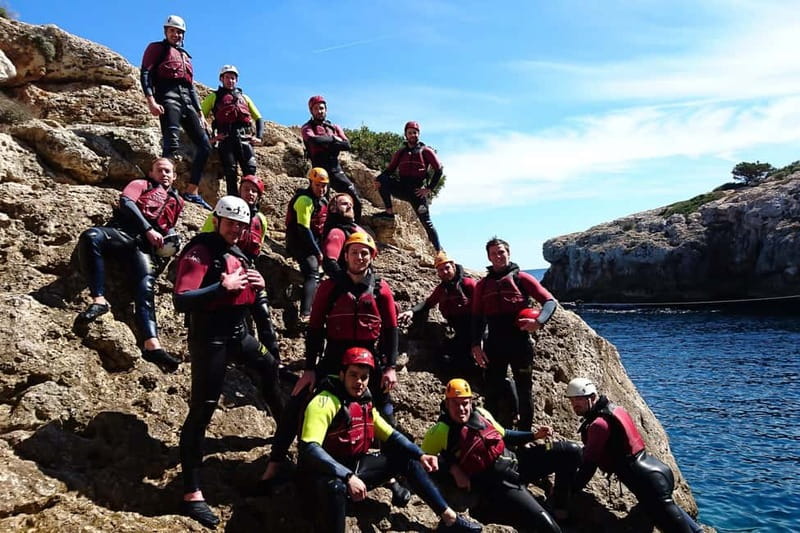
The guide can make or break an adventure activity. Here, the strongest pattern is a friendly and patient approach. Guides named Jose, Antonio, Juan, Joaquin, Mario, Connie, Alfonso, Alvaro, and Josef have led outings, and the activity is available in Spanish, English, German, and French.
That range helps mixed-language groups communicate during safety instructions. The guide also has to manage different confidence levels, since one person may race toward the highest jump while another needs time before trying a lower one.
Families have used the activity with children as young as 12, including a 13-year-old participant. Anyone under 18 must be accompanied by a parent or legal guardian. The small group cap helps, but parents should still be realistic about swimming ability, comfort with heights, and stamina.
The guide may also change the location when the sea is rough. One outing crossed the island to find better conditions. That can mean a longer transfer, but it is a sensible trade for a safer and more enjoyable route.
What to bring and what to leave behind
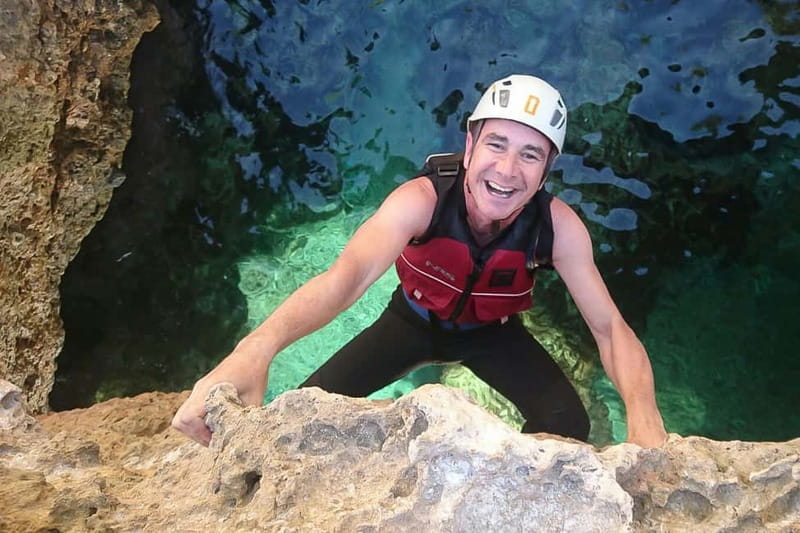
Pack lightly, but bring the items that make the day more comfortable:
- Swimwear
- Towel
- Water and snacks
- Sunscreen
- Sports shoes with full foot coverage
- Weather-appropriate clothing
You should expect your shoes and clothing to get wet. Sunscreen is easy to overlook when the day is spent close to the water, but the rock sections leave you exposed between swims.
Do not bring alcohol or drugs. Unaccompanied minors are not allowed. Valuables are best left behind, although the precise storage arrangement should be clear before you depart. If you need your phone for the pickup, make sure you can still access the meeting information without relying on a device that has been stored away.
The provider supplies safety equipment and liability insurance. Adventure activities still carry inherent risks, and the policy may not cover every situation, including risks linked to personal negligence. Personal injury insurance is optional, but worth considering if you want extra protection.
Is $79 good value for four hours?
At $79 per person, the price is reasonable if you want several active experiences in one outing. You are paying for a guide, safety equipment, liability insurance, and round-trip transport from the South Mallorca pickup zone. You also avoid arranging separate gear or finding an accessible coastal route yourself.
The value is strongest for visitors without a car or those who want a structured introduction to coasteering. A guide gives you access to jumps, caves, and abseiling that would be difficult to organize safely on your own.
The price is less compelling if you mainly want to swim or take photographs. This is an active program, and the equipment and transport do not change that. You are paying for instruction and participation, not a scenic ride.
The option to reserve now and pay later also helps if your Mallorca plans are still shifting. Free cancellation is available up to 24 hours before the activity for a full refund.
Who should book this Mallorca coasteering trip?
I would recommend it to fit adults, active families, couples, groups of friends, and solo visitors who want a social challenge. It works especially well for people who like trying several activities in one morning or afternoon rather than spending a full day on one sport.
It is also a good choice if you are nervous but curious. The lower jumps, supportive guides, and ability to skip a section give you room to build confidence. You should not expect a completely gentle introduction, but you do have control over how far you go.
I would not choose it if you have back problems, use a wheelchair, weigh more than 110 kilograms, or dislike open-water swimming. It is also a poor match if you are uncomfortable with caves, wet rock, heights, or being away from the shore.
FAQ
How long does the Mallorca coasteering experience last?
The activity is advertised as a four-hour experience. Start times vary, so check availability when booking. Allow extra flexibility because the route and sea conditions can affect the schedule.
What activities are included?
The experience combines swimming, cliff jumping, sea caving, rock scrambling, and abseiling. Some outings have also included a zip wire into the sea.
How high are the cliff jumps?
The advertised jump heights range from about 3 to 12 meters. Actual heights can vary by route and conditions, with lower options available for participants who do not want to attempt the highest jump.
Is transportation included?
Yes. Round-trip pickup is included from South Mallorca, covering the Arenal to Magaluf zone. Transfers normally take no more than 30 minutes and use small mini buses.
What languages do the guides speak?
Guides are available in Spanish, English, German, and French.
What is the minimum age?
The minimum age is 12. Participants under 18 must be accompanied by a parent or legal guardian.
What should I bring?
Bring swimwear, a towel, snacks, sunscreen, water, sports shoes with full foot coverage, and clothing suited to the weather. Rental shoes may be available if you forget suitable footwear.
Should you book it?
Book this experience if you want to work for your views of Mallorca. The cliff jumps, sea caves, and abseiling offer more variety than a standard beach outing, and the small group format gives the guide time to support nervous participants.
Go in with realistic expectations. You need to swim, scramble, handle wet rock, and accept that the sea and timing can affect the plan. If that sounds exciting rather than worrying, $79 buys a lively half-day with transport, equipment, and several distinct challenges in one beautiful coastal setting.
Just added around Mallorca
- Discover the major cultural attractions of Palma De Mallorca on a Private Tour★ 4.5 · 3 reviews
- Wine Tasting – wines from the smallest wineries 3 wines★ 5.0 · 3 reviews
- Extreme e-scooter off-road excursions★ 5.0 · 3 reviews
- Full-day Tour to Drach Caves and Portocristo Town★ 4.0 · 3 reviews
- Gaudí and Modernist Art: Guided Tour in Palma de Mallorca★ 4.5 · 3 reviews
- Peguera: The lovely Magical Creatures of Peguera,family walk★ 3.1 · 3 reviews
- Mallorca Beyond the Guidebooks – Tour with the famous Author★ 5.0 · 3 reviews
- Mallorca: Speleo-Coasteering Tour along the Coast of Alcudia★ 5.0 · 3 reviews
Mallorca Coasteering & Cliff Jumping, compared.
Quad Bike Tour, Snorkeling, and Cliff Jumping
Read our review →
Kayaking, Sea Cave, Cliff Jumping & Snorkel Tour
Read our review →Kayaking, Sea Cave, Cliff Jumping & Snorkel Tour
Read our review →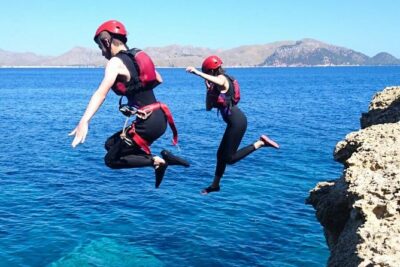
Small-Group Cliff Jumping Experience in Mallorca
Read our review →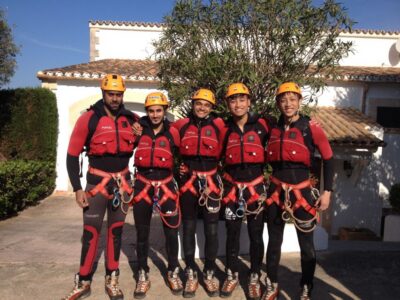
Browse the lists this tour appears in